Quick Answer: Most homeowners should change their air filter every 1–3 months, but waiting too long can restrict airflow and put unnecessary strain on the system. Homes with pets, frequent AC use, or poor outdoor air quality often need changes closer to every 30–60 days to keep the system running properly.
Introduction
Most people don’t think about their air filter until something feels off. Airflow seems weaker, dust builds up faster, or the system runs longer than it should.
The confusion comes from mixed advice. Some say monthly, others say every three months, and some say to just check it. The right answer depends on how your system is actually being used.
At Newman’s Heating and Cooling, this is one of the most common maintenance issues homeowners run into across Sacramento, Roseville, and Natomas. Filters are easy to forget, and that’s often where performance problems begin.
The Short Answer: How Often to Change Your Air Filter
- Every 30 days: Homes with pets, heavy AC use, or more dust and particles in the air
- Every 60 days: Average households with regular system use
- Every 90 days: Low-occupancy homes or minimal HVAC use
This is a guideline, not a fixed rule. The condition of the filter matters more than the calendar.
Why Air Filter Replacement Matters More Than You Think
Impact on Airflow and System Efficiency
A clogged filter restricts airflow. When air can’t move freely, the system has to work harder to circulate it.
That often shows up as weak airflow, longer run times, and reduced cooling or heating performance. Even if the equipment is still operating, it may not be running as efficiently as it should.
If this continues, the added strain can affect how well the system performs day to day.
Connection to Indoor Air Quality
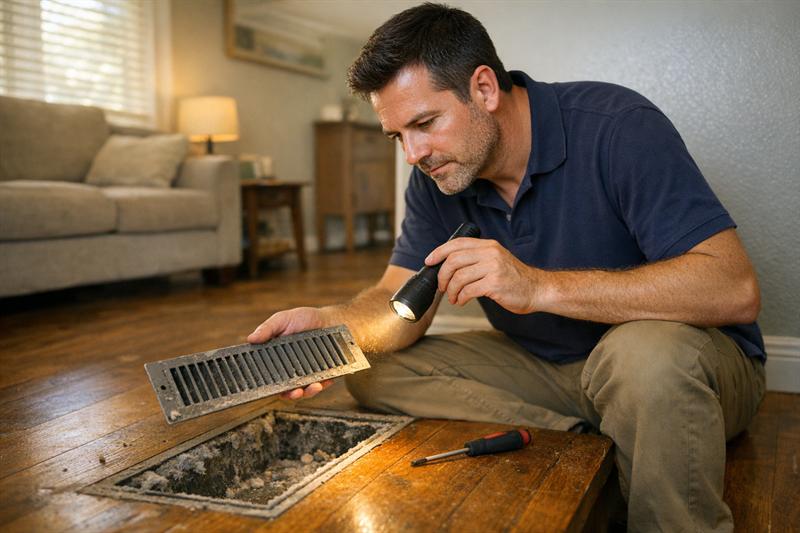
Your filter is there to capture dust, pollen, and airborne particles. Once it fills up, it becomes less effective and more particles stay in circulation.
A common sign is more dust settling around the home and the air feeling less clean. This can become more noticeable during heavy system use or when outdoor air quality declines.
For a deeper look at options, visit indoor air quality solutions for your home.
Long-Term Wear on HVAC Systems
Restricted airflow affects more than comfort. It puts added pressure on internal components.
Parts like the blower motor may have to work harder than normal. Over time, that extra load can contribute to wear that shows up as performance issues or repair needs.
In many cases, neglected filter changes are part of the problem.
What Affects How Often You Should Change Your Air Filter?
Home Size and System Usage
The more your system runs, the faster the filter collects debris. Larger homes and longer run times both increase how much air passes through the filter.
In this area, extended cooling seasons mean systems run frequently. That alone can shorten how long a filter stays effective.
Pets and Indoor Particles
Pet hair and dander can build up quickly inside a filter. Even a single pet can noticeably shorten how long it lasts.
In homes with pets, filters that might otherwise last a couple of months can become visibly dirty much sooner.
Filter Type and MERV Rating
- Basic fiberglass filters provide minimal filtration and may need more frequent replacement
- Pleated filters capture more particles and typically hold up better over time
- Higher MERV filters trap finer particles, but they should still be checked regularly to make sure airflow is not being restricted
Better filtration can help with air quality, but only if the filter is changed on time.
Local Climate and Air Quality (Sacramento Area Insight)
Local conditions play a role. Long cooling seasons mean more system use, and wildfire smoke can introduce fine particles that load filters quickly.
During smoke events, filters may become dirty faster than expected. That often shows up as reduced airflow or longer run times to maintain temperature.
Signs It’s Time to Change Your Air Filter
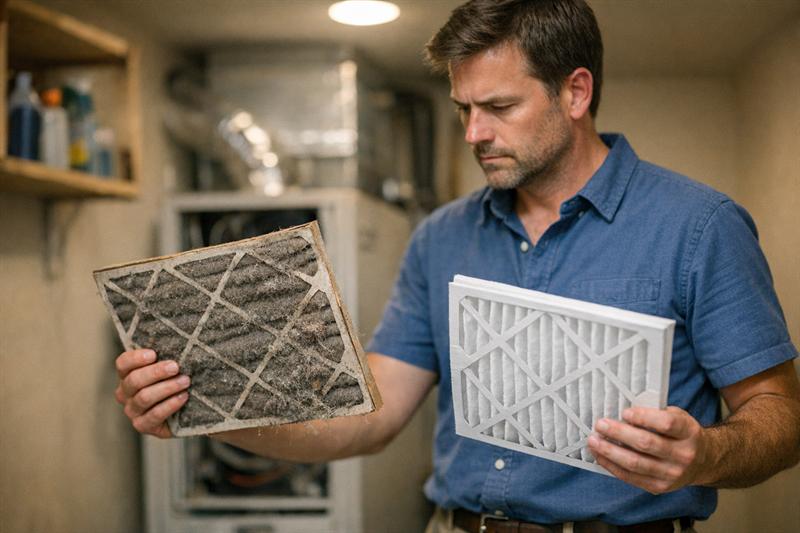
- Visible dust or dark buildup on the filter
- Airflow from vents feels weaker than usual
- Dust collects quickly on surfaces
- Indoor air feels stuffy
- The system runs longer to reach the set temperature
When several of these show up together, the filter may already be affecting performance.
How to Check and Replace Your Air Filter
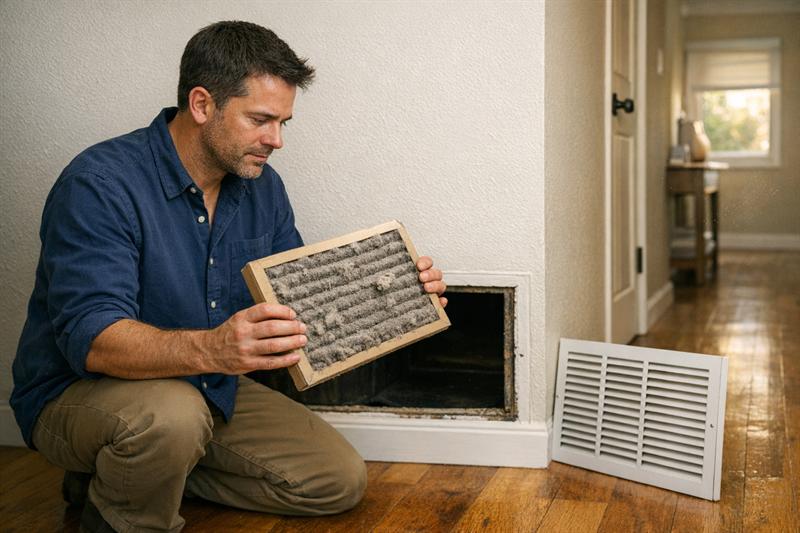
- Locate the filter at the return vent or inside the HVAC unit
- Remove it and look for visible buildup
- Match the size exactly when replacing it
- Install the new filter in the correct airflow direction
- Check it again in about a month
This is a quick task, but staying consistent with it can make a noticeable difference in system performance.
What Happens If You Don’t Change Your Air Filter?
The system usually doesn’t fail all at once. Performance tends to decline gradually.
- Airflow becomes restricted
- The system runs longer to do the same job
- Temperature control becomes less consistent
- Components operate under more strain
That’s where small issues can turn into larger ones. Many comfort complaints start with airflow problems, and a neglected filter is often part of the picture.
If cooling performance is already affected, it may be time to review air conditioning and furnace service and repair.
When to Consider Professional HVAC Maintenance
If changing the filter doesn’t improve things, the issue may go beyond basic maintenance.
- Airflow stays weak after replacement
- Some rooms feel warmer or cooler than others
- The system runs continuously without reaching the set temperature
- Energy use increases without a clear reason
These are signs the system may need a closer look.
If your system is still struggling after replacing the filter, the problem may be somewhere else in the system.
- No noticeable improvement in airflow
- Long run times continue
- Uneven temperatures persist
- Dust returns quickly after cleaning
At that point, a professional inspection is the next step to identify what’s causing the restriction or inefficiency.
Key Takeaways
- Most filters need replacing every 1–3 months
- Pets and heavy system use shorten that timeline
- Dirty filters restrict airflow and reduce performance
- Monthly checks help catch problems early
Conclusion
The issue isn’t just how often to change your filter. It’s what happens when it’s ignored.
Restricted airflow can lead to longer run times, uneven comfort, and added strain on the system. Left alone, that strain can build into performance problems that require more than a simple fix.
Newman’s Heating and Cooling helps homeowners across the area catch these issues early and keep systems running reliably. If your airflow hasn’t improved after replacing your filter, or your system is working harder than it should, it may be time to have it checked.
Schedule service with Newman’s Heating and Cooling to find out what’s affecting system performance.
FAQ
How do I know if my air filter is dirty?
Check it visually. If it looks dark or clogged and airflow feels reduced, it’s probably time for a replacement. If a new filter doesn’t improve airflow, the issue may go deeper.
Is it bad to change your air filter too often?
No. Replacing it early won’t hurt the system, but most filters are designed to last 1–3 months. Monthly checks help you replace it when needed.
Do higher MERV filters need to be changed more often?
They can fill up faster because they capture finer particles, so they should be checked regularly. The right replacement timing depends on the filter, the system, and conditions inside the home.
How often should I change my air filter with pets?
Every 30–60 days is a practical range. Pet hair and dander can build up quickly, so checking monthly helps prevent early clogging.
Can a dirty air filter affect AC performance?
Yes. Reduced airflow makes it harder for the system to cool effectively, which can lead to longer run times and less consistent temperatures.
What happens if you never change your air filter?
Airflow becomes restricted, performance drops, and the system works harder than it should. Over time, that added strain can increase the likelihood of repair needs.