Quick Answer: Air duct cleaning makes sense when there are clear signs of buildup or contamination, such as visible dust, airflow problems, persistent odors, or issues after renovations, smoke exposure, or pest activity. If none of those signs are present, cleaning is often unnecessary.
Introduction
Many homeowners hear the same recommendation at some point: “you need duct cleaning.” The problem is that advice is often given without much context, which makes it hard to know whether it actually applies to your home.
At Newman’s Heating and Cooling, this question comes up regularly. Some systems clearly need duct cleaning. Others do not benefit from it. The difference usually comes down to what is happening inside the ductwork, not a standard schedule.
Why Air Duct Cleaning Is Often Misunderstood
Duct cleaning is often treated like routine maintenance, and that is where confusion starts. Homeowners are sometimes told to clean ducts every few years regardless of system condition.
In practice, ducts do not collect debris on a fixed timeline. Buildup is usually tied to specific events or conditions such as construction, poor filtration, pest activity, or airflow issues. Without those factors, ducts may stay relatively clean.
This leads to two common mistakes. Cleaning too often adds unnecessary cost. Waiting too long when buildup is present can allow dust, odors, or airflow problems to continue.
When to Clean Air Ducts: The Situations That Actually Matter
The right time to clean air ducts is when there is a clear reason. In most cases, the signs are noticeable in the home or connected to a recent event.
After Home Renovations or Construction
Renovation work can create fine dust that moves through the HVAC system. Drywall particles, insulation, and sawdust may settle inside ductwork.
After remodeling projects, it is not unusual for dust to remain in the system even after surfaces have been cleaned. When the HVAC runs, that leftover debris can continue circulating through the home.
If You Notice Visible Dust or Debris
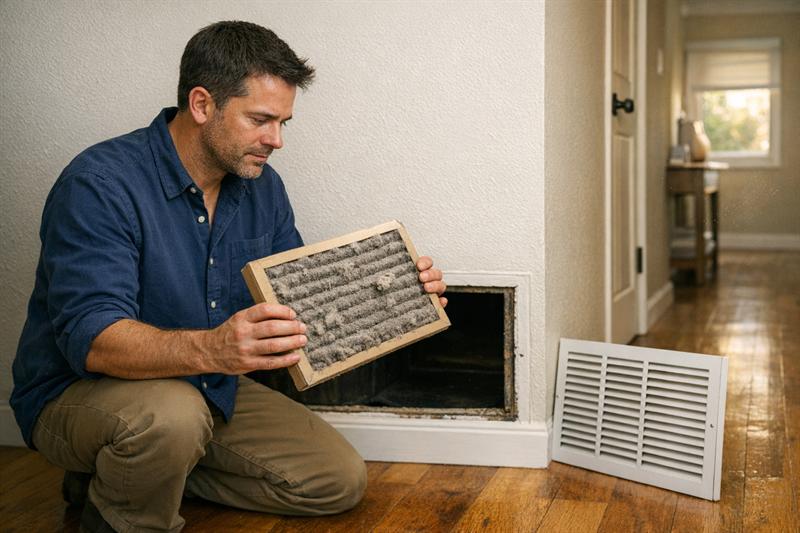
If dust appears to be blowing from vents or collecting quickly around registers, it may point to buildup inside the ducts or another airflow-related issue in the system.
That kind of dust pattern usually has a cause. An inspection can help determine whether the source is the ductwork, filtration, or another part of the HVAC system.
When Airflow Feels Blocked or Uneven
Uneven temperatures or weak airflow in certain rooms can sometimes be linked to restrictions in the duct system.
Debris is only one possible cause, but if buildup is affecting how air moves through the home, it can lead to longer run times and reduced comfort.
After Pest or Rodent Activity
Pests inside ductwork can leave behind nesting material, droppings, and other debris. If that contamination is present, cleaning the affected ductwork is often worth considering.
This is one of the clearer cases where an inspection and follow-up cleaning may be appropriate.
If There Are Signs of Mold or Musty Odors
Musty smells when the system runs can point to moisture somewhere in the HVAC system, including the ductwork.
When odors persist, the priority is identifying the source. If buildup or moisture is present inside the ducts, cleaning may be part of the solution.
After Heavy Smoke Exposure (Wildfires or Indoor Events)
Smoke particles can move through a home’s air system and settle inside ductwork.
In areas like Sacramento, wildfire smoke can be a real concern. If smoke residue has entered the system, it may continue affecting indoor air conditions after outdoor air improves.
If you are noticing any of the following, duct cleaning may be worth evaluating:
- Dust coming from vents or collecting quickly around registers
- Persistent odors when the HVAC system runs
- Uneven airflow or rooms that stay uncomfortable
- Recent renovation, smoke exposure, or pest activity
When these signs appear, the duct system is one area worth checking. An inspection helps confirm whether cleaning is the right next step.
How Often Should Air Ducts Be Cleaned?
There is no universal schedule for duct cleaning. The commonly repeated “every 3 to 5 years” guideline does not fit every home.
Some homes accumulate debris faster than others. That depends on factors such as pets, dust levels, filtration quality, and how often the system runs.
- Homes with pets may collect hair and dander more quickly
- Dusty environments can increase the amount of material entering the system
- Frequent HVAC use moves more particles through the ducts
- Poor filtration can allow more debris to circulate through the system
Because of this, condition matters more than time. If there are no clear signs of a problem, cleaning is often not needed.
When You Probably Don’t Need Duct Cleaning
There are many situations where duct cleaning is not the right solution.
If there is no visible dust issue, no airflow problem, and no unusual odor, the ducts are less likely to be the source of a concern. In some homes, the real issue is a clogged filter, leaky ductwork, or overdue HVAC maintenance.
In those cases, cleaning the ducts may not improve system performance or resolve the underlying problem.
Air Duct Cleaning vs. General HVAC Maintenance
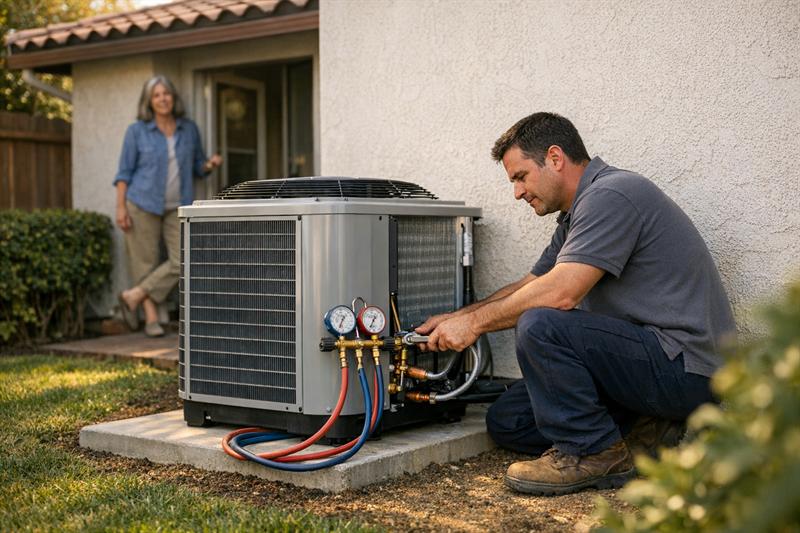
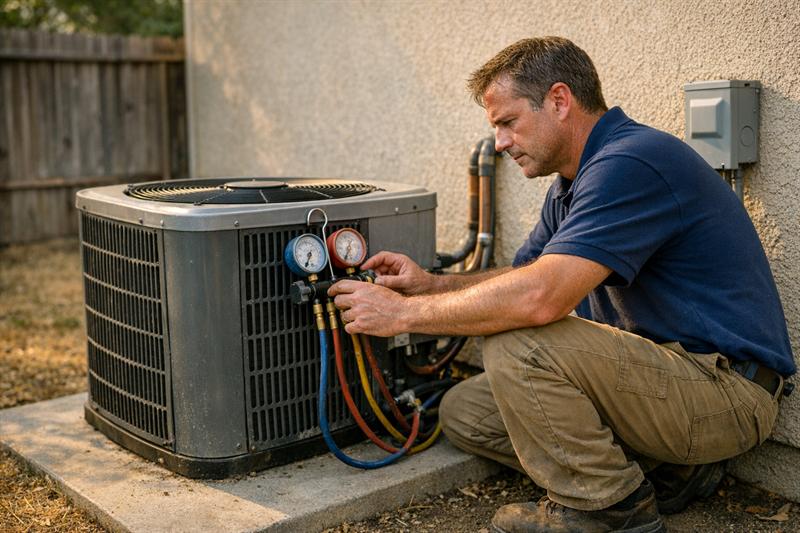
Duct cleaning and HVAC maintenance serve different purposes. Maintenance focuses on system components such as filters, coils, and airflow adjustments that more directly affect performance.
Many comfort and efficiency issues trace back to maintenance, not duct buildup. That is where confusion happens. Cleaning ducts alone will not fix problems caused by neglected system components.
For a complete system check, services like air conditioning and furnace service and repair can help identify the source of the problem.
Indoor Air Quality: When Ducts Are Only Part of the Problem
Ducts are only one part of indoor air quality. Filtration, humidity, and ventilation all affect what circulates through the home.
One common mistake is focusing only on ducts while overlooking filtration. If filters are not doing their job, particles can keep moving through the system even after cleaning.
Improving air quality often requires looking at the system as a whole. Options like improving your home’s indoor air quality can help address more than a single component.
What to Expect From a Professional Duct Inspection
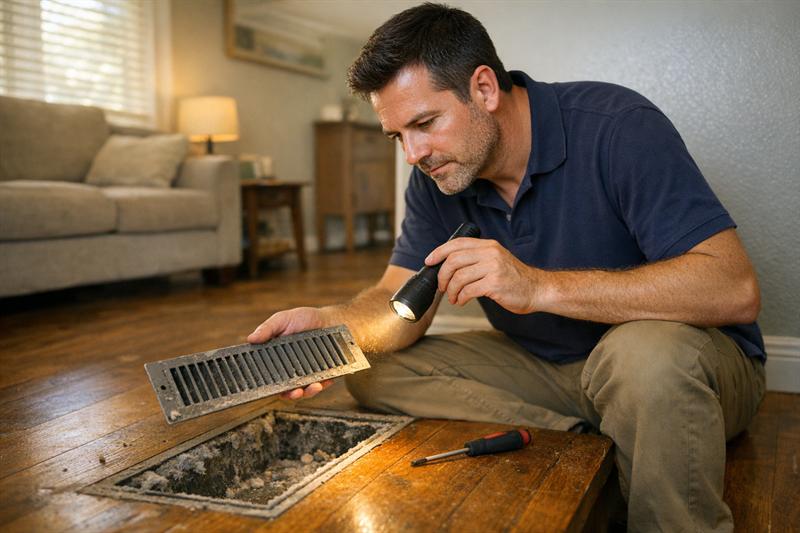
A proper inspection focuses on the actual condition of the system. Technicians look for visible buildup, airflow restrictions, and signs of contamination.
This is what helps make the decision clearer. If there is enough buildup or debris to justify cleaning, that can be addressed. If the ducts are not contributing to the issue, attention can shift to other parts of the system.
At Newman’s Heating and Cooling, inspections are meant to guide the recommendation so the focus stays on the work that is most likely to help.
Key Takeaways
- Duct cleaning should be based on system condition, not a set schedule
- Visible dust, odors, and airflow issues are common reasons to have ducts checked
- Many HVAC problems are caused by maintenance issues, not dirty ducts
- When buildup or contamination is present, cleaning may help reduce ongoing dust or comfort issues
Conclusion: Making the Right Call for Your Home
The challenge with duct cleaning is knowing when it actually applies. Cleaning too early does not solve much. Waiting too long when buildup is present can allow dust, odors, or airflow problems to continue.
Without a clear inspection, it is easy to focus on the wrong issue and miss the real cause.
Newman’s Heating and Cooling focuses on understanding what is happening inside your system before recommending any work. If you are seeing signs like dust, odors, or uneven airflow, it may be time to have the system evaluated.
Schedule an evaluation with Newman’s Heating and Cooling to get a clearer answer and the right next step for your home.
Frequently Asked Questions
How do I know when to clean air ducts?
Direct answer: Air ducts are usually worth cleaning when you notice dust buildup, odors, airflow issues, or contamination after events like renovations or pest activity.
Why it matters: These signs can point to debris or other material inside the system that may continue circulating.
Next step: Have the system inspected to confirm whether the ductwork is part of the problem.
How often should air ducts be cleaned in a home?
Direct answer: There is no fixed schedule; it depends on the condition of the system and the home environment.
Why it matters: Homes with pets, more dust, or poor filtration may accumulate debris faster than others.
Next step: Pay attention to signs of buildup instead of relying only on a timeline.
Is air duct cleaning really necessary?
Direct answer: It can be necessary in certain situations, but it is not something every home needs on a routine basis.
Why it matters: If there is no meaningful buildup or contamination, cleaning may not make much difference.
Next step: Base the decision on what is actually happening in the system.
Can dirty air ducts affect health?
Direct answer: Dirty ducts can contribute to indoor air quality concerns when dust or other contaminants are present.
Why it matters: Material inside the ductwork can be circulated through the home while the system is running.
Next step: If indoor air concerns continue, look at the ductwork along with filtration and overall HVAC condition.
Will duct cleaning improve HVAC efficiency?
Direct answer: It may help if buildup is restricting airflow, but it is not a fix for every efficiency problem.
Why it matters: Many performance issues come from maintenance-related problems elsewhere in the system.
Next step: Have the full system checked before deciding on cleaning.
What are the risks of not cleaning air ducts?
Direct answer: If ducts are contaminated or heavily loaded with debris, leaving them alone can allow dust, odors, or airflow issues to continue.
Why it matters: The system may keep moving that material through the home during normal operation.
Next step: Once there are clear signs of a problem, have the system evaluated and address the cause.