Quick Answer: Indoor air quality matters because the air inside your home continuously recirculates, allowing dust, allergens, and other pollutants to build up and affect comfort, day-to-day well-being, and HVAC performance. When air quality declines, homeowners often notice fatigue, irritation, lingering odors, dust buildup, or uneven airflow that becomes more noticeable without proper filtration and system maintenance.
Many homeowners assume the air inside their home is clean by default. In practice, that is not always the case. Newman’s Heating and Cooling works with homeowners who notice dust buildup, stale air, or uneven airflow that points to larger filtration or circulation issues.
Indoor air does not refresh on its own. It depends on how well your HVAC system moves, filters, and conditions the air. When that process is off, contaminants can stay in circulation and gradually build up.
What Indoor Air Quality Really Means
Indoor air quality refers to how clean and balanced the air is inside your home. That includes airborne particles, humidity levels, and how effectively air moves through the space. It is not limited to what you can see.
Temperature usually gets the most attention, while airflow and filtration are easy to overlook. When air is not moving properly or filters are not doing their job, particles remain in the system and continue circulating.
Common Pollutants Found Inside Homes
- Dust from daily activity and surfaces
- Pet dander and hair
- Pollen carried in from outside
- Smoke and fine airborne particles
- Household chemicals and cleaning product residue
- Mold spores in damp or poorly ventilated areas
Why Indoor Air Can Be More Polluted Than Outdoor Air
Indoor air can become more concentrated because it is contained. Modern homes are sealed for efficiency, which limits fresh air exchange. As a result, the same air is often recirculated through the system.
This becomes more noticeable when airflow is restricted or filters are clogged. Instead of removing particles effectively, the system keeps moving them from room to room.
Why Indoor Air Quality Is Important for Your Health
Indoor air quality is closely tied to how people feel inside their home. Poor air conditions are often associated with irritation and discomfort that do not have an obvious cause.
Short-Term Effects You Might Notice
- Dry or irritated eyes and throat
- Frequent headaches
- Fatigue or low energy indoors
- Allergy-like symptoms that improve when leaving the home
If these symptoms seem stronger indoors than outside, indoor air may be part of the problem.
Long-Term Exposure Concerns
When air quality issues continue over time, discomfort tends to become more consistent. This is often when homeowners begin noticing that the problem is no longer occasional.
One common pattern is increased sensitivity to dust or allergens, especially in spaces with limited airflow. Without changes to filtration or circulation, the environment stays the same and the issue can continue.
How Indoor Air Quality Affects Comfort and Daily Living
Air quality plays a direct role in how comfortable your home feels. Many problems show up as subtle changes in how the air feels rather than an obvious system failure.
Sleep, Energy, and Focus
Stuffy or poorly circulated air can make rooms feel heavier, especially at night. That often leads to restless sleep and waking up feeling less refreshed.
This tends to be more noticeable in bedrooms where airflow is weak or uneven.
Odors, Dust, and Air Staleness
If dust returns quickly after cleaning or smells linger longer than expected, the air may not be moving or filtering effectively. These are common early signs that airflow or filtration is off.
Over time, that can leave a home feeling stale instead of refreshed.
The Hidden Role of Your HVAC System
Your HVAC system controls how air moves, how it is filtered, and how evenly it is distributed. When it is working properly, it supports cleaner, more balanced air. When it is not, it can contribute to ongoing air quality issues.
Homeowners sometimes replace filters and still deal with dust or discomfort because the underlying issue is airflow, duct condition, or overall system performance.
How Air Filters and Airflow Impact IAQ
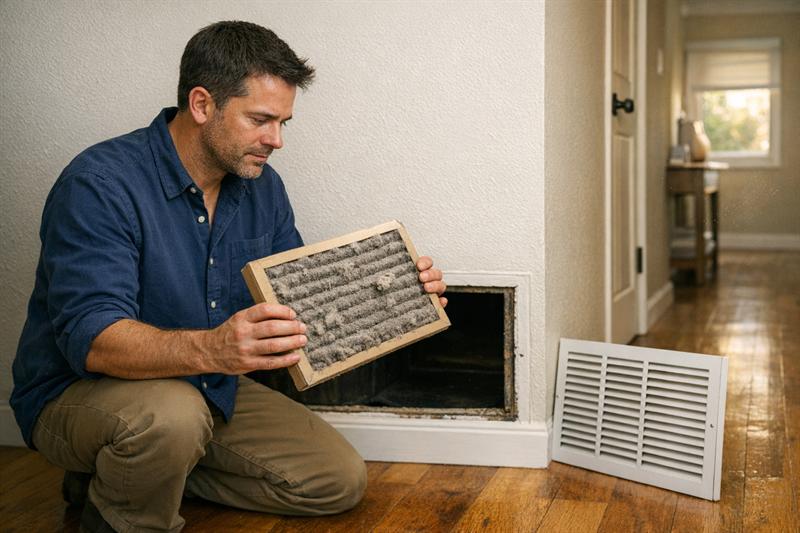
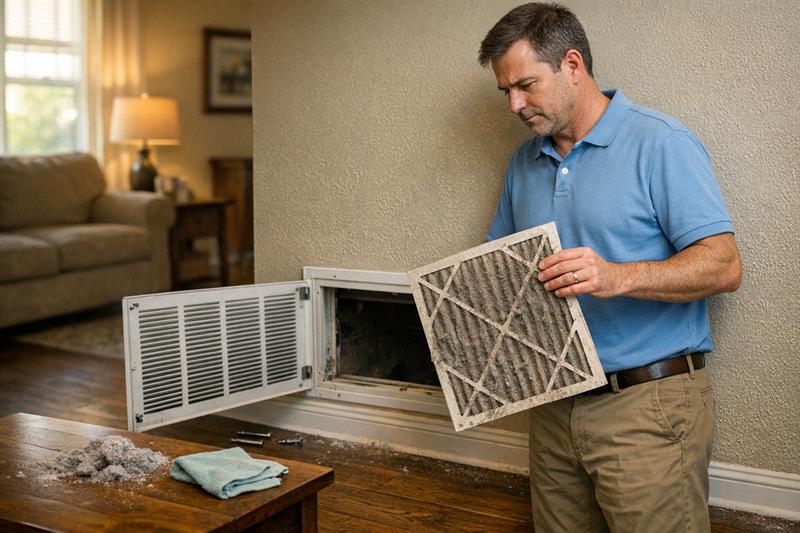
Filters are designed to capture airborne particles, but their effectiveness depends on the filter type and replacement timing. When filters are overdue for replacement or not suited for the system, particles continue moving through the home.
Airflow determines how well air is distributed. If certain rooms receive less circulation, particles tend to settle and build up in those areas.
Using the right filter and maintaining proper airflow can make a noticeable difference. Learn more about choosing the right air filter.
When Your System Makes Air Quality Worse
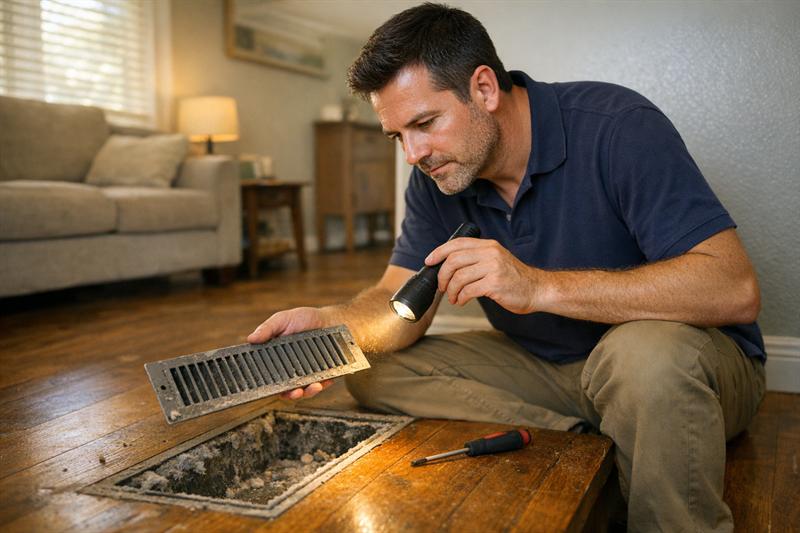
This is where problems often become more obvious. Dirty filters, buildup inside ductwork, or inconsistent maintenance can allow contaminants to circulate instead of being removed.
A common sign is visible dust near vents or rooms that feel stuffy or uneven. This can point to buildup in the system or leaks that pull in unfiltered air.
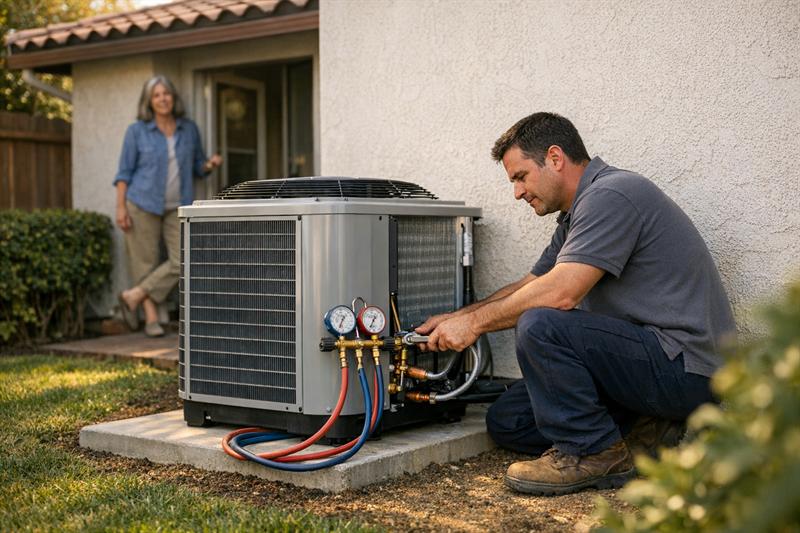
Ongoing maintenance helps prevent these problems. See what proper service involves with regular HVAC maintenance.
Signs Your Indoor Air Quality May Be Poor
- Dust builds up quickly after cleaning
- Rooms feel stuffy or airflow is inconsistent
- Odors linger instead of clearing
- Allergy-like symptoms are stronger indoors
- Air feels overly dry or humid
When several of these signs show up together, they often point to a broader airflow or filtration issue rather than a single source.
For a closer look at airflow problems, see how your HVAC system affects airflow.
What Causes Poor Indoor Air Quality in Homes
Indoor air quality problems usually come from a mix of indoor sources and outside contaminants. These issues tend to build gradually, which is why they are often overlooked at first.
Indoor Sources
- Cleaning products and chemical residue
- Cooking particles and everyday dust
- Pets and dander
- Materials used in furniture or finishes
Outdoor Factors Entering the Home
Pollen, smoke, and fine particles can enter through small openings and ventilation paths. Once inside, they often stay in circulation.
This can become more noticeable when ductwork or system sealing is compromised, allowing outside air to enter without proper filtration.
How to Improve Indoor Air Quality
Improving air quality starts with identifying whether the issue is surface-level or tied to system performance. In many homes, both play a role.
Simple Changes Homeowners Can Make
- Replace air filters on a consistent schedule
- Keep vents open and unobstructed
- Reduce dust and chemical sources where possible
- Introduce fresh air when outdoor conditions allow
When to Consider Professional Solutions
If these steps do not resolve the issue, the problem may be deeper in the system. This is when airflow adjustments, duct inspection, or upgraded filtration may be worth considering.
If you are noticing these signs, it may be time to have the system checked:
- Dust returns within days of cleaning
- Rooms feel uneven or consistently stuffy
- Allergy-like symptoms are stronger indoors
- Airflow from vents feels weak or inconsistent
When multiple indicators are present, the system may not be managing air effectively.
Key Takeaways
- Indoor air quality affects both comfort and overall well-being
- Problems often develop gradually and become more noticeable over time
- HVAC systems play a central role in air circulation and filtration
- Ignoring early signs can lead to ongoing discomfort and reduced system efficiency
- Clear patterns often point to airflow or filtration issues
Conclusion
Poor indoor air quality can build over time and rarely improves on its own. What starts as dust or stale air can turn into ongoing discomfort, uneven airflow, and persistent indoor air problems that affect how your home feels every day.
Surface fixes only go so far. When the root issue is in the HVAC system, the same problems can continue to circulate. That is where a proper system check can help identify what is actually causing the issue.
Newman’s Heating and Cooling focuses on identifying airflow, filtration, and system performance issues that affect air quality. If your home is showing these signs, the next step is a full system check to find where the problem may be coming from.
Explore available solutions here: indoor air quality services.
Addressing the issue now can help restore steadier airflow and a more comfortable indoor environment.
Frequently Asked Questions
Why is indoor air quality important in a home?
Indoor air quality affects how clean and breathable your air feels. When pollutants build up, they circulate through the home and can contribute to discomfort and irritation. If symptoms seem to improve outside the home, indoor air may be one factor.
What are the most common causes of poor indoor air quality?
Common causes include dust, pet dander, chemicals, and outdoor particles entering the home. These build up when airflow is limited or filtration is not effective. In many homes, it is a combination of factors rather than one single cause.
How can I tell if my indoor air quality is bad?
Typical signs include dust buildup, stale air, lingering odors, and stronger allergy-like symptoms indoors. When these appear together, they often point to a broader airflow or filtration issue.
Can HVAC systems improve indoor air quality?
Yes, HVAC systems directly influence how air is filtered and circulated. When properly maintained, they can help reduce airborne particles and improve airflow. When neglected, they can also contribute to ongoing air quality problems.
What is the fastest way to improve indoor air quality?
Replacing the air filter and making sure vents are clear are two of the quickest steps. These can improve airflow and reduce circulating dust. If conditions do not improve, deeper system issues may be involved.
Does indoor air quality affect sleep?
Indoor air quality can affect how comfortable a space feels at night. Stuffy air, uneven airflow, and airborne particles may make it harder to sleep well. Improving airflow and filtration often helps a bedroom feel more comfortable.