Quick Answer: Indoor air quality problems usually come from a combination of poor ventilation, HVAC system issues, and indoor pollutants like dust, moisture, and allergens. These factors often overlap and build over time when the root cause is not addressed.
Why Indoor Air Quality Problems Often Go Unnoticed
Indoor air quality problems rarely start with one obvious sign. They tend to develop gradually, so a little more dust, slightly stale air, or mild irritation can be easy to overlook.
In homes throughout the Sacramento area, tighter construction can also play a role. When less outside air enters the home, indoor air continues to recirculate, which can allow particles and other pollutants to linger longer than expected.
When airflow and filtration are not working together, the same air keeps moving through the system without being cleaned effectively. That is where many indoor air quality issues begin.
Indoor air quality solutions are most effective when they focus on what is contributing to the problem rather than only addressing surface symptoms.
Common Signs You May Have Indoor Air Quality Problems
Indoor air quality issues usually show up as a pattern rather than a single sign. Recognizing that pattern is often the first step.
Physical Symptoms
- Allergy-like symptoms that seem worse indoors
- Frequent headaches or low energy at home
- Dry throat, irritated eyes, or congestion
- Symptoms that ease after spending time away from the house
Environmental Clues Inside the Home
- Dust returning quickly after cleaning
- Musty or stale odors that linger
- Rooms that feel stuffy or uneven
- Air that feels unusually dry or humid
When several of these signs appear together, they often point to a broader air quality issue rather than a single cause.
Regular HVAC maintenance and repair can help reduce the conditions that allow these issues to develop.
The Most Common Causes of Indoor Air Quality Problems
Indoor air quality problems are rarely caused by one issue alone. In many homes, several factors work together and gradually affect the air inside.
Poor Ventilation and Trapped Air
When fresh air is not entering the home, indoor air can become stagnant. Particles that would normally be diluted or carried out of the house remain inside.
This is especially common in tightly sealed homes, where dust, allergens, and other airborne particles can build up over time.
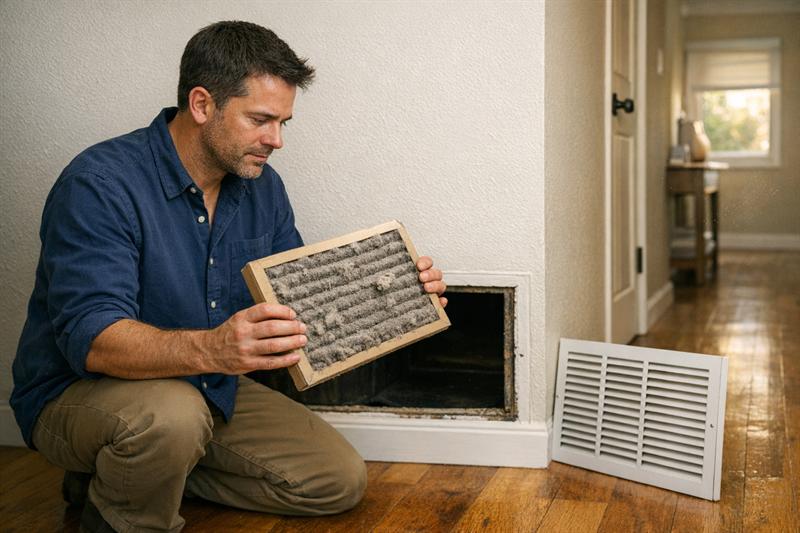
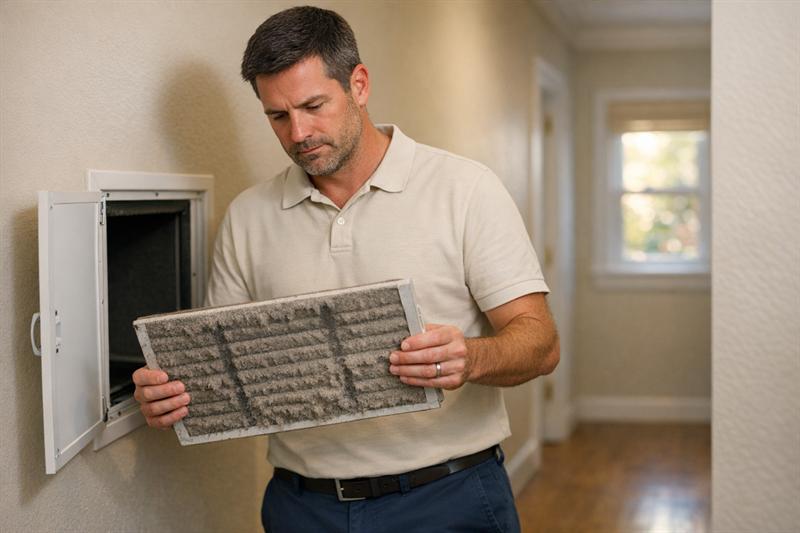
Dirty or Clogged HVAC Filters
Air filters are designed to capture airborne particles. When they become clogged, airflow can be restricted and filtration becomes less effective.
One common issue is leaving filters in place too long. When that happens, the system may keep circulating air without removing as many particles as it should.
You can learn more here: how air filters impact indoor air.
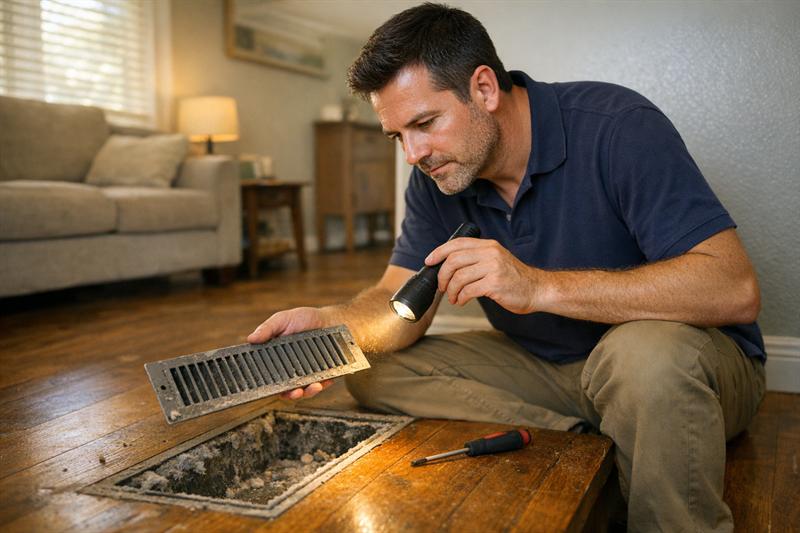
Dust and Debris in Ductwork
Dust naturally collects inside duct systems over time. It becomes more of a concern when that dust is repeatedly carried back into living spaces.
This often shows up as dust returning quickly after cleaning, especially when airflow is moving particles through the system instead of keeping them contained.
Excess Humidity or Overly Dry Air
Humidity affects both comfort and air quality. High humidity can support moisture buildup and create conditions where mold may grow. Very dry air can make the home feel less comfortable and allow some particles to stay airborne more easily.
These conditions often change with the seasons, which can make the problem more noticeable at certain times of year.
Mold, Mildew, and Hidden Moisture
Mold and mildew can develop in areas that are not immediately visible, including around damp surfaces, inside walls, or near parts of the HVAC system.
A musty odor is often an early sign. If moisture remains present, the issue can spread and continue to affect indoor air conditions.
Pet Dander and Everyday Allergens
Pet dander, dust, and other allergens settle into carpets, furniture, and other soft surfaces. Once they enter the airflow, they can continue circulating through the home.
This can contribute to ongoing irritation and make indoor air feel less comfortable.
Outdoor Pollutants Entering the Home
Outdoor air can carry pollen, dust, and smoke into the home. In this region, wildfire smoke can become a factor during certain seasons.
If the home is not sealed or filtered well, those particles can enter and remain inside, where they continue to circulate.
How HVAC Systems Contribute to Air Quality Issues
The HVAC system moves air throughout the home, so it has a direct effect on how particles, odors, and humidity are distributed.
One common issue is airflow imbalance. Some areas receive more air than others, which can lead to uneven comfort and inconsistent air movement.
If the system is not maintained or adjusted properly, it may keep recirculating air without improving overall air quality. Problems with filters, ducts, or airflow can all contribute.
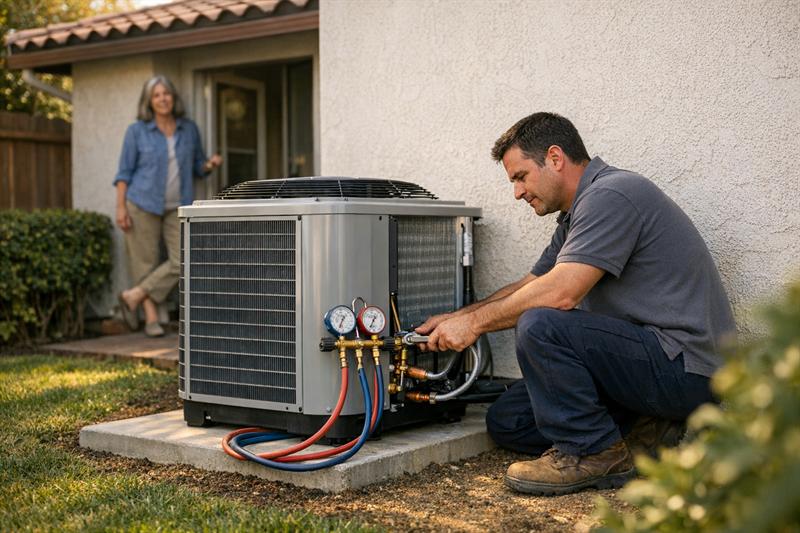
HVAC system inspection and repair can help identify how the system is affecting indoor air conditions.
Why Indoor Air Quality Problems Are Often Misdiagnosed
Indoor air problems are often treated as one-off issues, but that approach does not always solve them.
For example, dust or odor may seem like the main problem when the real cause involves a mix of airflow, humidity, and filtration issues.
When only one piece is addressed, the same problem can return. Finding how those factors work together is usually the key to lasting improvement.
If You’re Noticing These Signs, It’s Time to Act
If the same issues keep repeating, there is likely an underlying problem that needs attention.
- Dust builds up again shortly after cleaning
- Rooms feel stuffy or inconsistent
- Odors linger longer than expected
- Allergy-like symptoms continue indoors
When these patterns appear together, it often means the air is being recirculated without effective filtration or ventilation. At that point, a full system evaluation may be the most practical next step.
When to Take Indoor Air Quality Problems Seriously
- Symptoms continue over time
- Air smells or feels noticeably different
- Comfort varies from room to room
- Sleep or day-to-day comfort is affected
When these signs persist, the underlying issue is unlikely to improve on its own and may continue to affect comfort throughout the home.
How a Professional Inspection Identifies the Root Cause
Improving indoor air quality starts with understanding what is happening throughout the system.
A typical inspection reviews:
- Airflow throughout the home
- Filter condition and performance
- Ductwork for buildup or restriction
- Humidity levels and possible moisture sources
This process helps identify which factors are contributing most to the problem. Instead of relying on trial and error, the goal is to make targeted improvements based on what is actually found.
To learn more or schedule service, visit our indoor air quality inspection page.
Conclusion
Indoor air quality problems are usually the result of multiple overlapping factors rather than one isolated issue. Ventilation, filtration, humidity, and overall system performance all play a role.
When these problems are left unaddressed, the same air continues to circulate and the conditions behind the issue remain in place.
Newman’s Heating and Cooling focuses on identifying the contributing factors and addressing them together. Looking at airflow, filtration, and system performance as a whole makes it easier to understand what is affecting the air in your home.
Scheduling an inspection is a practical next step if you want clearer answers and more consistent indoor comfort.
Key Takeaways
- Indoor air quality problems usually involve multiple contributing factors
- Signs often appear before the cause is obvious
- HVAC systems affect how air moves and how well it is filtered
- Issues often persist when only one factor is addressed
- A thorough inspection can help guide more effective improvements
Our Approach to Indoor Air Quality
Newman’s Heating and Cooling approaches indoor air quality by looking at the full system rather than focusing on one symptom at a time.
That includes how air moves through the home, how it is filtered, and how moisture and other indoor conditions may be affecting comfort.
By addressing how these factors work together, the goal is to create cleaner, more consistent indoor air over time.
FAQ
What are the most common indoor air quality problems?
Common issues include poor ventilation, clogged filters, dust buildup, humidity imbalance, and airborne allergens. These factors often overlap, which is why air quality can decline gradually until the underlying causes are addressed.
How do I know if my home has poor air quality?
Common signs include persistent dust, noticeable odors, and irritation that seems worse indoors. Many homeowners also notice that the air feels better after spending time outside the home. When these patterns continue, they often point to problems with filtration, ventilation, or airflow.
Can HVAC systems cause indoor air quality issues?
HVAC systems can contribute to air quality issues if they are not maintained or balanced properly. Problems with filters, ducts, or airflow can allow particles to circulate throughout the home.
What is the biggest cause of indoor air pollution in homes?
Poor ventilation is one of the most common causes because it allows pollutants to stay indoors instead of being diluted or removed. Over time, that can lead to a buildup of particles, odors, and moisture.
Does changing air filters improve indoor air quality?
Changing filters can help improve air quality by capturing more airborne particles, but it is usually only one part of the solution. Airflow, humidity, and overall system condition also affect indoor air.
How can I test the air quality in my home?
Basic test kits can offer limited information, but they do not always show the full picture. A professional inspection can review airflow, filtration, and system performance together to better identify what may be affecting the air in your home.