Quick Answer: Uneven heating and cooling is usually caused by airflow problems, ductwork issues, insulation gaps, or system imbalance rather than the thermostat alone. When conditioned air is not moving through the home evenly, some rooms can feel comfortable while others stay too hot or too cold.
Why Your Home Feels Unevenly Heated or Cooled
One room feels fine, while another never seems comfortable no matter what you set the thermostat to. That kind of temperature mismatch is one of the most common comfort issues homeowners notice.
At Newman’s Heating and Cooling, this problem often comes back to how air is moving through the home. The thermostat may be part of the picture, but uneven comfort is more commonly tied to airflow, duct performance, or differences between rooms. When air is not delivered and returned evenly, comfort becomes inconsistent even if the system is still running.
This usually becomes more obvious during peak heating and cooling seasons. When the system runs longer, smaller airflow issues tend to show up more clearly.
What Causes Uneven Heating and Cooling in a Home
Uneven temperatures are often the result of several factors working together rather than a single failure. Airflow, ductwork, insulation, home layout, and equipment condition can all affect how evenly a system heats or cools.
Many homeowners respond by adjusting the thermostat, but the real issue is often how air is being supplied and returned throughout the house.
Airflow Imbalances and Distribution Problems
Your HVAC system depends on balanced airflow. Air is supplied into rooms and pulled back through return vents. When that balance is off, some areas receive less conditioned air than they need.
If airflow is restricted in one part of the system, it can affect comfort in other parts of the home as well.
Blocked or Closed Vents
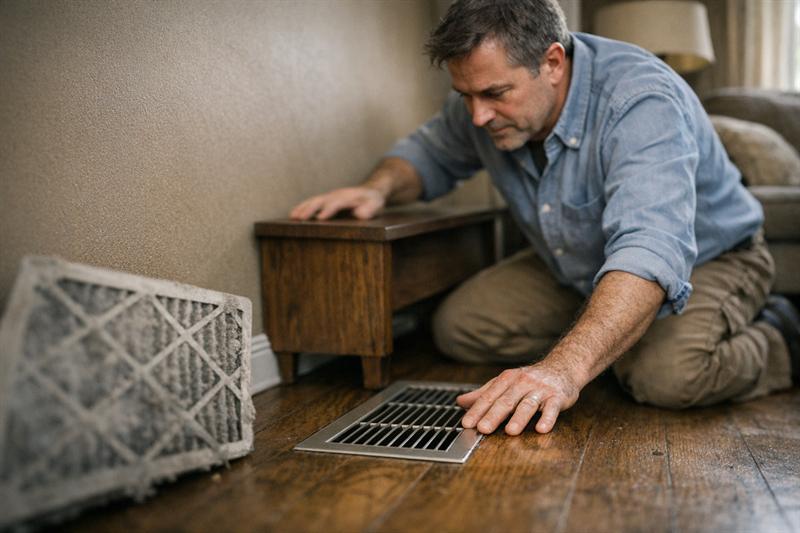
Blocked vents are a simple issue, but they are easy to overlook. Furniture, rugs, curtains, or closed registers can limit how much air enters a room.
That restriction changes how air is distributed elsewhere, which can lead to uneven temperatures that do not improve with thermostat changes alone.
Dirty Air Filters Restricting Airflow
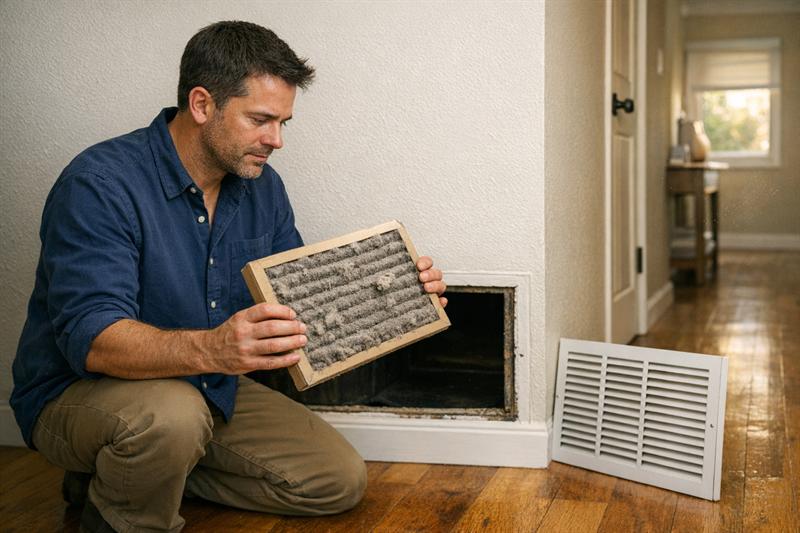
A clogged air filter reduces how much air can move through the system. Less airflow usually means less consistent heating and cooling from room to room.
This is one of the first things checked during many service visits. A dirty filter can weaken airflow across the system and contribute to rooms that never quite reach the right temperature. It may also affect overall indoor air quality.
Leaky or Poorly Designed Ductwork
Ductwork is responsible for delivering air to each room. If ducts are leaking, disconnected, undersized, or poorly laid out, air may not reach the areas that need it most.
This often shows up as specific rooms that stay consistently uncomfortable. In older homes, duct issues are a frequent contributor to uneven temperatures.
Insulation and Air Sealing Issues
Some rooms lose or gain heat faster than others. Poor insulation, attic exposure, drafty windows, and exterior walls can all make temperatures harder to maintain.
When those differences are significant, the HVAC system has to work harder to keep up, and some rooms may still lag behind.
Thermostat Placement Problems
If the thermostat is located near a vent, window, hallway draft, or direct sunlight, it may read a temperature that does not reflect the rest of the home.
That can lead to run cycles that are too short or too long, leaving other areas underheated or overcooled.
HVAC System Size or Aging Equipment
Systems that are too large may cycle on and off too quickly. Systems that are too small may run longer and still struggle to keep up.
As equipment ages, airflow and output can become less consistent. That may show up as uneven temperatures from room to room. In some cases, targeted heating repair or cooling repair can help restore more reliable performance.
Simple Checks You Can Do Before Calling a Professional
Some uneven heating and cooling issues are straightforward and can be addressed quickly. These checks can help rule out a few of the most common causes.
Check and Open All Vents
Walk through the home and make sure supply vents and returns are open and not blocked. Even partial blockage can reduce airflow into a room.
Replace or Clean Your Air Filter
If the filter looks dirty, replace or clean it based on the type of filter your system uses. This is one of the easiest ways to improve airflow.
Look for Visible Duct Issues
If any ductwork is accessible, check for loose connections, disconnected sections, or visible damage. Air loss in these areas can reduce how much conditioned air reaches each room.
Observe Patterns in Temperature Differences
Pay attention to where the issue shows up. If only one room behaves differently, the problem may be local to that area. If multiple rooms or an entire floor are affected, the issue is more likely tied to broader airflow or duct problems.
When Uneven Temperatures Point to a Bigger Problem
If basic checks do not improve the situation, the problem is often deeper in the system.
Multiple Rooms Are Affected
When several rooms feel too warm or too cool, the issue is rarely isolated to one vent or one room. That often points to a larger airflow or ductwork problem.
Persistent Issues Despite Basic Fixes
If vents are open and filters are clean but comfort does not improve, the system may not be distributing air effectively. This is often where duct issues, airflow restrictions, or equipment performance problems become more apparent.
Large Differences Between Floors
It is common for upstairs areas to feel warmer than downstairs, especially in summer. Heat rises, but poor airflow design or weak return air can make that difference more noticeable.
When the gap between floors is significant, system adjustments or home comfort upgrades may be needed to improve balance.
If you are noticing any of the following, the issue is likely beyond simple fixes:
- One entire floor is consistently uncomfortable
- Airflow feels weak in multiple rooms
- Temperature differences remain regardless of thermostat changes
- The system runs longer, but comfort does not improve
At that point, a professional inspection is usually the most efficient way to find the source of the imbalance.
How HVAC Professionals Diagnose and Fix the Issue
A professional evaluation usually focuses on identifying where airflow is being restricted, lost, or misdirected and then correcting the source of the problem.
In many homes, uneven comfort comes from several smaller issues happening at once. Fixing only one part of the problem may help, but it does not always restore consistent results on its own.
Duct Inspection and Cleaning
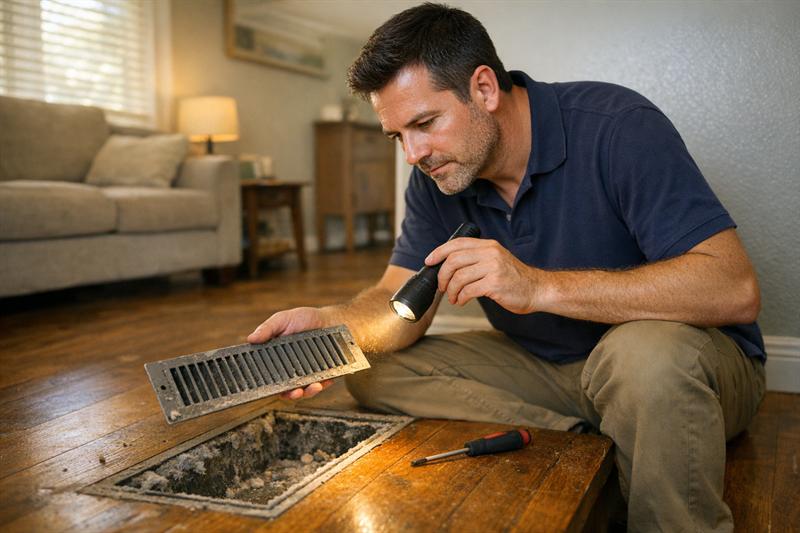
Ducts may be checked for leaks, disconnected sections, damage, restrictions, or buildup. Correcting those issues can improve how air moves through the system.
When buildup inside the duct system is affecting airflow, cleaning may also be part of the solution.
Airflow Balancing and System Adjustments
Adjustments can be made to dampers, vents, and airflow paths so rooms receive a more even share of conditioned air.
The right approach depends on how the system is designed and how air is currently moving through the home.
Targeted Heating or Cooling Repair
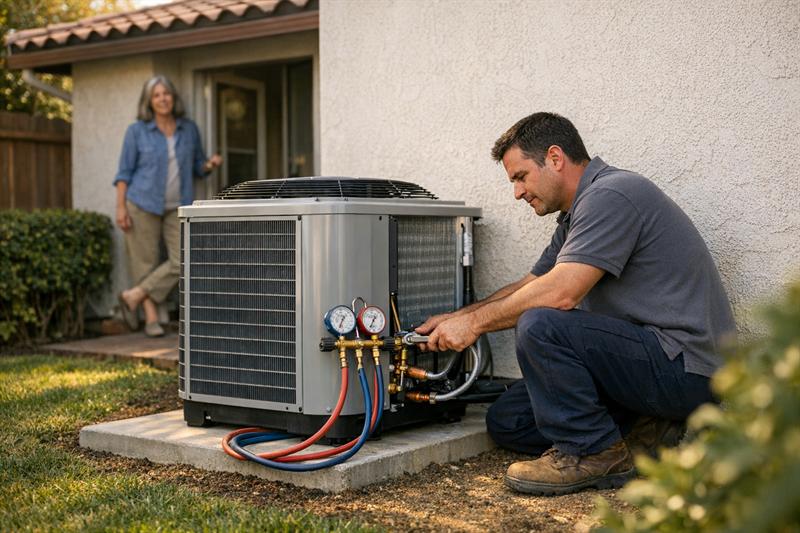
If parts of the system are not performing properly, repair work may help restore more consistent heating or cooling.
This can include addressing blower issues, airflow restrictions, or worn components that affect distribution.
When Zoning or Upgrades May Be Recommended
In some homes, especially multi-level layouts, zoning allows different areas to be controlled separately.
This is often considered when standard airflow adjustments are not enough to improve comfort throughout the house.
How to Prevent Uneven Heating and Cooling
Preventing uneven temperatures usually comes down to maintaining airflow and addressing smaller issues before they turn into larger comfort problems.
Keep Airflow Paths Clear
Keep vents and returns unobstructed so air can move freely through the home.
Schedule Regular HVAC Maintenance
Routine maintenance can help catch airflow and performance issues early, before they have a bigger impact on comfort. Learn more about available HVAC services and repair options.
Improve Insulation and Sealing
Improving insulation and sealing air leaks can help stabilize indoor temperatures so the HVAC system does not have to compensate as much from room to room.
Key Takeaways
- Uneven temperatures are often caused by airflow, ductwork, insulation, or system-related issues
- Basic steps like opening vents and replacing filters can sometimes solve simple problems
- Ongoing comfort issues often point to larger airflow or ductwork imbalances
- Ignoring the problem can reduce comfort and make the system work harder than necessary
- A professional inspection can help identify the cause and the most effective fix
Conclusion
Uneven heating and cooling is usually a sign that air is not moving through your home as evenly as it should. Over time, that can lead to ongoing comfort problems and unnecessary strain on the system.
What starts as a minor imbalance often becomes more noticeable as seasons change and demand on the system increases. Rooms stay uncomfortable longer, and the system may run more without delivering better results.
Newman’s Heating and Cooling approaches this by identifying where airflow is breaking down and correcting the issue at the source. Whether the problem involves ductwork, equipment performance, or airflow balance, the goal is more consistent comfort throughout the home.
If your home has persistent hot and cold spots, a professional evaluation can help pinpoint the cause and outline the next steps to improve balance.
Frequently Asked Questions
Why is one room in my house always hotter or colder than others?
This usually comes down to airflow issues, blocked vents, insulation differences, or duct problems affecting that room. When only one room is involved, the cause is often local to that area. An inspection can help identify what is limiting comfort there.
Can closing vents in unused rooms help balance temperature?
Closing vents can disrupt airflow and change pressure in the system. In many homes, that makes temperature differences worse instead of better. A proper airflow adjustment is usually a better long-term solution.
How do I know if my ductwork is causing uneven temperatures?
Common signs include weak airflow, inconsistent temperatures, and rooms that do not reach the set temperature. These patterns can point to leaks, restrictions, or layout issues in the duct system. A duct inspection can help confirm whether that is part of the problem.
Is uneven heating and cooling a sign my HVAC system is failing?
Not necessarily, but it can be a sign that the system is not distributing air evenly or is no longer performing as well as it should. If multiple areas are affected, airflow or equipment issues may be involved. An evaluation can help narrow down the cause.
Why is my upstairs always hotter than my downstairs?
Heat naturally rises, and upper floors are often harder to keep comfortable without strong airflow and return air movement. If the difference is significant, balancing adjustments or zoning may help improve comfort.
Will a new HVAC system fix uneven temperatures?
Only if the equipment itself is a main part of the problem. If ductwork, airflow design, insulation, or air sealing are contributing to the imbalance, replacing the system alone may not fully solve it. A full system review helps determine the best approach.