Quick Answer: Poor airflow in a home is usually caused by restrictions such as dirty filters, duct leaks, or an imbalanced air distribution setup, not necessarily a failing HVAC system. In many cases, improving airflow comes down to removing those restrictions and correcting how air moves through the house.
Introduction
If some rooms feel comfortable while others never do, airflow is likely part of the problem. This is common in many homes. The system runs, but conditioned air is not reaching certain areas the way it should.
It is easy to assume the equipment is too old or too small. In many cases, the issue starts with how air moves through ducts, vents, and returns. When that movement is restricted, comfort drops quickly.
Signs Your Home Has an Airflow Problem
Airflow problems usually follow clear patterns. If these are happening, your system may not be distributing air evenly.
- Rooms that stay warmer or cooler than the rest of the house
- Weak airflow coming from certain vents
- The system runs longer without improving comfort
- Upstairs areas stay noticeably hotter
Uneven Temperatures Between Rooms
This is one of the clearest signs. One area feels fine while another never reaches the thermostat setting. It often points to airflow imbalance or air loss in the duct system.
Weak or Inconsistent Vent Airflow
If airflow is noticeably weaker in certain rooms, something is likely restricting it before it gets there. Duct leaks, disconnected sections, or blockages are common causes.
System Running Longer Than Expected
When airflow is limited, the system may run longer to try to keep up. That can lead to uneven temperatures and higher energy use without solving the comfort issue.
What Causes Poor Airflow in a Home
Airflow depends on the whole system working together. When something slows or blocks that movement, the effect can show up throughout the home.
Dirty or Incorrect Air Filters
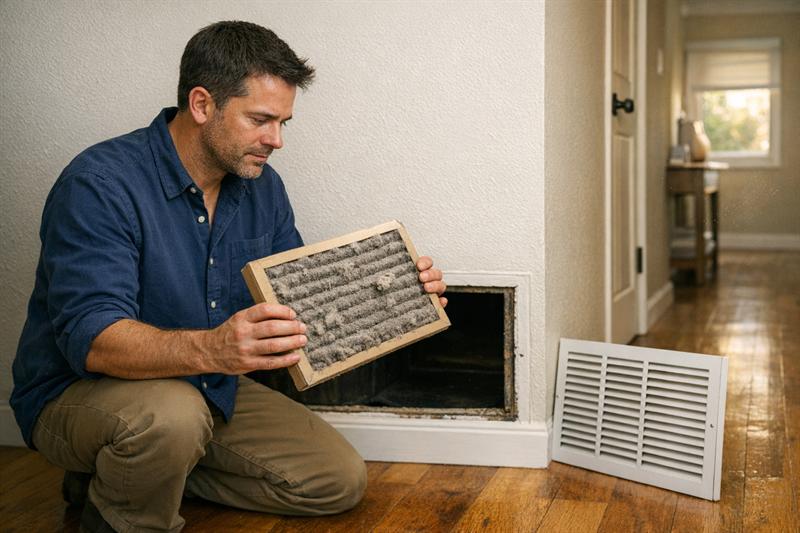
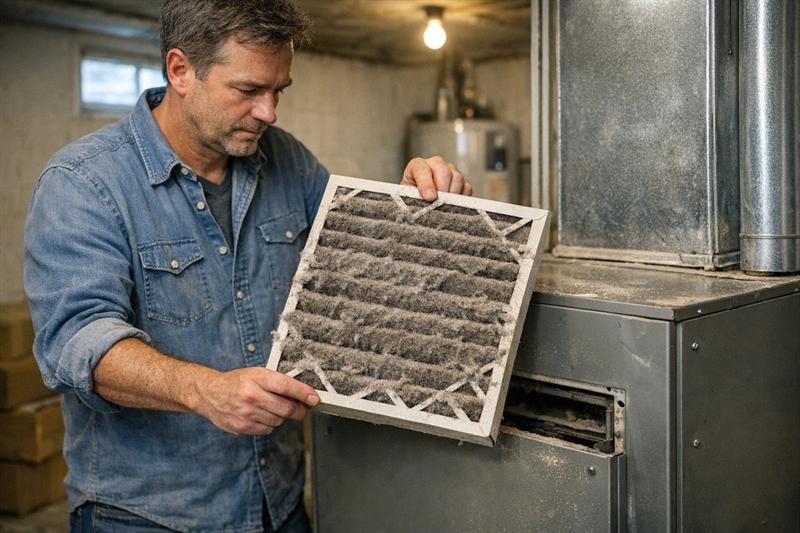
This is one of the most common causes. A clogged or overly restrictive filter can limit how much air passes through the system.
Sometimes filters are simply overdue for replacement. In other cases, a higher-density filter has been installed without considering how it affects airflow.
Leaky or Poorly Designed Ductwork
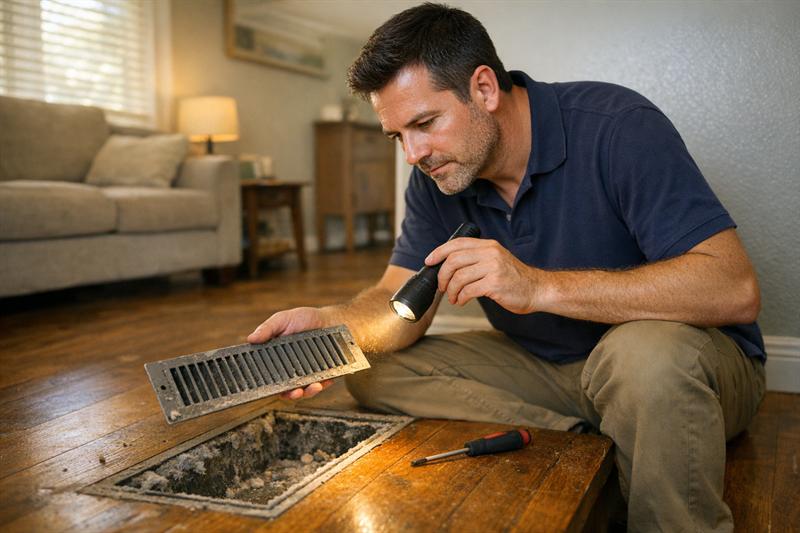
Air that never reaches the room is often escaping through gaps in the ductwork. This is especially common in attics, crawlspaces, or older duct systems.
Over time, even small leaks can reduce airflow at vents and make certain rooms harder to heat or cool.
Closed or Blocked Vents
Closing vents to redirect air may seem like a simple fix, but it can work against the system. It can increase pressure in the ductwork and reduce overall airflow.
Instead of improving comfort in one area, it often creates new airflow problems elsewhere in the house.
Insulation and Heat Gain Issues
In warmer climates, heat can build up in attic spaces and transfer into the home. Even when airflow is adequate, that added heat can make rooms harder to cool.
That is one reason upstairs areas often stay warmer. Air may be reaching the space, but it is working against ongoing heat gain.
System Imbalance or Poor Design
Air needs to move in and out of each room. When that balance is off, some areas receive too much air while others do not get enough.
This can lead to ongoing comfort problems that do not improve with simple changes like adjusting registers or replacing a filter.
Simple Ways to Improve Airflow Right Away
Some airflow problems can improve by removing obvious restrictions. These are the first steps worth taking.
Replace or Upgrade Your Air Filter
A clean, properly matched filter allows air to move more freely. For many homeowners, this is one of the quickest things to check.
For more on maintaining airflow and overall system performance, see indoor air quality solutions.
Make Sure Vents Are Fully Open and Unblocked
Furniture, rugs, or closed registers can limit airflow. Keeping vents open and clear helps the system distribute air as designed.
Adjust Registers for Better Distribution
Small adjustments can help guide airflow where it is needed. Fully closing vents should be avoided because it can restrict system performance.
Use Ceiling Fans to Support Air Circulation
Fans help move air within a room. That can make temperatures feel more even, even if the HVAC system airflow itself has not changed.
Advanced Airflow Improvements That Make a Bigger Impact
If basic fixes do not resolve the issue, the restriction is usually deeper in the system.
Duct Sealing and Repair
Sealing duct leaks helps more air reach the intended rooms. In many homes, this makes a noticeable difference in comfort and airflow.
Multiple small leaks across the system can add up and reduce performance more than homeowners realize.
Air Balancing and System Adjustments
Air balancing adjusts how airflow is distributed throughout the home. This is especially helpful in homes with multiple levels, long duct runs, or areas that stay consistently uncomfortable.
Adding or Improving Return Vents
Air must return to the system to keep moving properly. Without enough return airflow, supply air cannot circulate effectively.
Improving Attic Insulation
Reducing heat entering the home lowers the demand placed on the system. That can make it easier for existing airflow to maintain more consistent temperatures.
If you are noticing these signs, the issue may need professional attention:
- Rooms that never reach the thermostat setting
- Weak airflow even after replacing filters
- Upstairs areas that stay consistently warmer
- Long system run times without improvement
At that point, the problem is often beyond basic adjustments. Finding the restriction usually requires a closer inspection of the system and ductwork.
When Airflow Problems Point to a Bigger Issue
Some airflow problems are symptoms of larger system limitations. These tend to persist even after basic fixes.
Static Pressure Problems
When airflow is restricted, pressure can build inside the system. Over time, that can reduce performance and place added strain on equipment.
Aging or Undersized HVAC Systems
If the system cannot move enough air for the home, comfort issues may continue regardless of filter changes or vent adjustments.
Poor Original Duct Design
This is common in older homes. Ducts may be undersized, poorly routed, or not well matched to the layout of the house.
In those cases, surface-level fixes usually do not solve the problem. Changes to the duct system may be needed.
How Professional HVAC Service Improves Airflow
At a certain point, trial and error stops being useful. Airflow problems need to be traced back to the source.
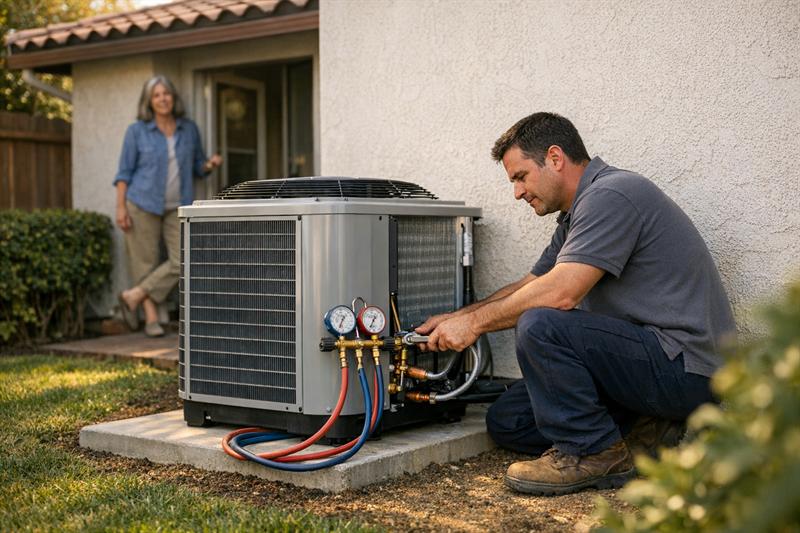
Professional HVAC service may include checking airflow, inspecting ductwork, and identifying where restrictions or losses are occurring. From there, targeted adjustments or repairs can help restore more balanced airflow.
Services like air conditioning and furnace service and repair can help identify those issues and correct them so the system can move air more effectively.
Key Takeaways
- Airflow problems often come from restrictions, not equipment failure
- Filters and ductwork are common starting points
- Closing vents can reduce overall airflow
- Balanced airflow supports more consistent comfort
- Ongoing issues typically need a professional evaluation
Conclusion
Poor airflow can lead to uneven temperatures, longer run times, and ongoing discomfort. If the underlying cause is not addressed, those problems usually continue.
This is where many homeowners get stuck. Small adjustments are made, but the actual restriction is never corrected. As a result, the same comfort issues keep coming back.
Newman’s Heating and Cooling focuses on identifying where airflow is breaking down and correcting it at the source. When basic fixes are not enough, a proper evaluation is often the most direct path to more consistent comfort.
How Newman’s Heating and Cooling Approaches Airflow Problems
Airflow issues usually build over time. Restrictions, small duct leaks, and imbalance can gradually reduce how well air moves through the home.
In many service calls, the equipment is still operating, but airflow is being limited by the layout or condition of the ductwork.
The goal is to identify those patterns through inspection and system testing, then make targeted adjustments where they will have the most impact. That helps homeowners avoid unnecessary replacement when the real issue is airflow.
For homeowners dealing with uneven comfort, that approach can lead to more consistent results.
FAQ
How can I improve airflow in my home without replacing my HVAC system?
Start by removing restrictions such as dirty filters and blocked vents. These are common causes of reduced airflow.
If airflow does not improve, the issue may be deeper in the system, such as duct leaks or imbalance.
At that point, a professional inspection can help identify the cause.
Why is airflow weak in some rooms but not others?
This happens when air is not evenly distributed through the duct system. Distance, leaks, restrictions, and duct layout can all affect airflow.
A common pattern is weaker airflow in rooms farthest from the equipment.
Balancing or duct adjustments are often needed to improve it.
Does closing vents in unused rooms improve airflow?
No, in most cases it reduces overall airflow and increases pressure in the system.
That can weaken performance across the home rather than improving comfort in one area.
Keeping vents open usually supports better airflow balance.
How do I know if my ducts are causing airflow problems?
Common signs include weak airflow, uneven temperatures, and rooms that never reach the desired setting.
That can mean air is being lost or restricted before it reaches those areas.
A duct inspection can help confirm the issue and guide the next step.
Can insulation affect airflow in a house?
Yes, insulation affects how much heat enters the home.
When heat gain is high, the system has to work harder to maintain comfort, especially on upper floors.
Improving insulation can make existing airflow more effective.
When should I call an HVAC professional for airflow issues?
Call when basic steps do not improve comfort or airflow.
Persistent issues often involve duct design, pressure, leakage, or overall system limitations.
A professional inspection can help identify what needs to be corrected.