Quick Answer: Ductwork efficiency directly affects how well your HVAC system performs. When ducts leak, restrict airflow, or distribute air unevenly, you can end up with weak airflow, inconsistent temperatures, and higher energy use even if the equipment itself is still operating.
Many homeowners focus on the HVAC unit when something feels off. In many cases, the problem starts in the ductwork. Newman’s Heating and Cooling commonly finds airflow issues hidden behind walls, above ceilings, or in attics when systems seem underpowered or rooms never feel comfortable.
What Is Ductwork Efficiency?
Ductwork efficiency describes how effectively air moves from your HVAC system to each room without being lost, restricted, or unevenly distributed. When ducts are working properly, airflow is more balanced, temperatures stay more consistent, and the system does not have to run longer than necessary.
How Air Moves Through Your HVAC System
Your HVAC system depends on a continuous loop. Air is pulled in through return ducts, conditioned, and pushed back out through supply ducts. That process works best when airflow remains steady throughout the system.
When airflow is disrupted, performance drops. Even small leaks or restrictions can reduce how much conditioned air actually reaches the rooms you use every day.
Why Efficiency Is About More Than Just Sealed Ducts
Sealing matters, but it is only one part of the system. Duct size, layout, insulation, and airflow balance all affect performance. A system can have sealed ducts and still struggle if airflow is restricted or pressure becomes unbalanced.
One common issue is a duct system that was never well matched to the home. The equipment may run, but the air does not reach the areas that need it most.
How Poor Ductwork Impacts HVAC Performance
Poor ductwork does not just affect comfort. It changes how the entire system operates and how hard it has to work.
Air Leaks and Energy Loss
Leaky ducts allow conditioned air to escape before it reaches your rooms, often into attics or crawl spaces.
This can lead to longer run times because the system has to make up for lost air. Over time, that often shows up as higher energy use and reduced overall efficiency.
Restricted Airflow and Pressure Problems
When ducts are undersized, blocked, or poorly routed, airflow slows down and static pressure can increase inside the system.
That added resistance forces the system to work harder, which can contribute to comfort problems and more wear over time.
Uneven Temperatures Throughout the Home
Hot and cold spots are often tied to airflow imbalance. Some rooms receive strong airflow while others get very little.
This becomes more noticeable during extreme weather, when the system is already working harder to keep up.
Increased Wear on Your HVAC System
When airflow is not consistent, the system often compensates by running longer cycles. That added runtime can increase wear on key components.
Over time, systems operating under ongoing airflow strain may need service sooner than expected.
Common Signs Your Ductwork Is Reducing Efficiency
Duct issues usually show up as comfort problems inside the home, not obvious mechanical failures.
- Rooms that never reach the right temperature: Some areas stay too hot or too cold regardless of settings
- Weak airflow from vents: Airflow feels light or inconsistent in certain rooms
- Higher energy bills: Costs increase without a clear change in usage
- Frequent HVAC cycling or repairs: The system turns on often or struggles to maintain temperature
If several of these signs are showing up together, the issue is often airflow-related rather than a failing unit. In some homes, equipment gets replaced before the duct system is ever checked.
For a closer look at how system performance is evaluated, see air conditioning and furnace service and repair.
What Causes Ductwork Inefficiency?
Duct inefficiency usually develops over time or starts with design limitations.
Poor Duct Design or Sizing
Ducts that are too small can restrict airflow, while oversized ducts can affect air delivery and system balance.
This is a common issue in older homes or installations where airflow planning was limited.
Aging or Damaged Duct Materials
Over time, duct materials can develop cracks, gaps, or loose connections.
These failures allow air to escape and reduce how effectively the system delivers conditioned air.
Disconnected or Leaking Joints
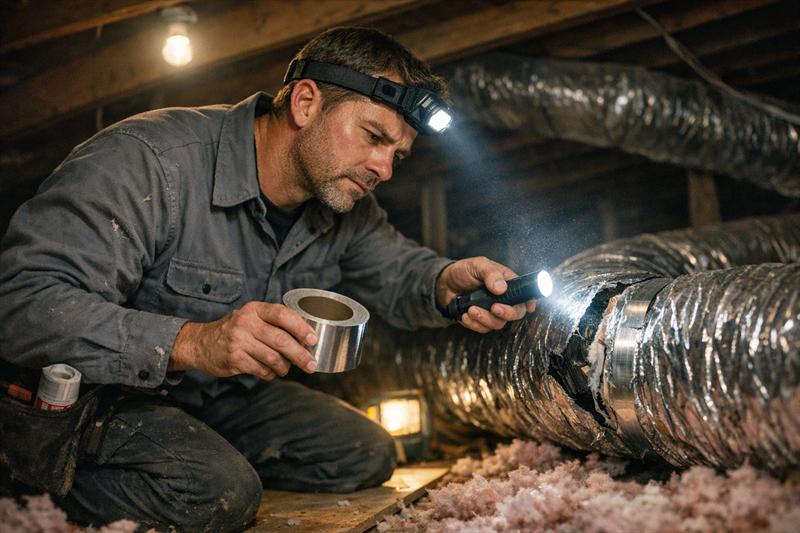
Duct sections can separate, especially in attics or crawl spaces. When that happens, air is lost before it reaches the living space.
This often goes unnoticed because the problem is hidden from view.
Lack of Insulation in Key Areas
Ducts located in hot spaces like attics can absorb surrounding heat. In cooling season, that can warm the air before it reaches your rooms.
The result is reduced cooling effectiveness and longer run times.
How to Improve Ductwork Efficiency
Improving ductwork efficiency starts with identifying where airflow is being lost or restricted.
Professional Duct Inspection
An inspection can help evaluate airflow, pressure, and the physical condition of the duct system.
What seems like an equipment problem sometimes traces back to the ducts.
Duct Sealing and Repair
Sealing leaks reduces air loss and can help restore proper airflow.
This often leads to more even temperatures and less strain on the system.
Airflow Balancing and System Adjustments
Adjustments to dampers and airflow distribution can help each room receive a more appropriate amount of air.
This is especially helpful in homes where some rooms consistently feel different from others.
When Duct Replacement Is Necessary
In some cases, ducts are too damaged or poorly designed to correct with repairs alone.
This can come up in older homes where the existing layout no longer supports the system well.
If your home has persistent comfort issues, this is often what it points to:
- Rooms stay uneven no matter how the thermostat is set
- The system runs longer during hot or cold weather
- Airflow feels weak or inconsistent across vents
- Energy costs continue to rise without a clear reason
When these signs appear together, a duct inspection is often the next logical step.
How Ductwork Efficiency Connects to Indoor Air Quality
Ductwork affects more than airflow. It also influences what circulates through your home.
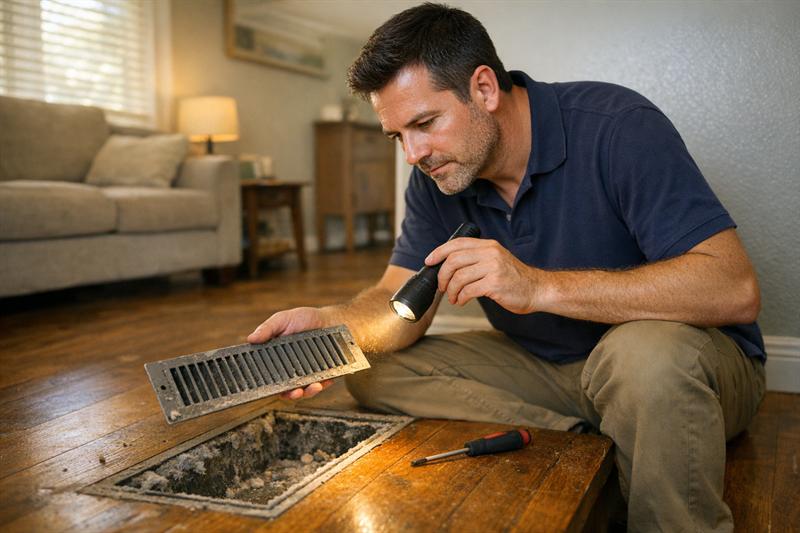
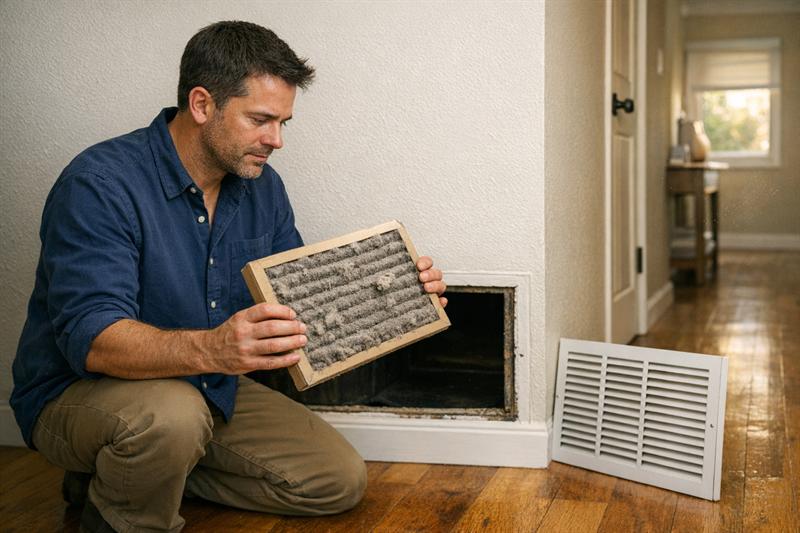
Leaky ducts can pull in dust and other particles from attics or crawl spaces and move them through the system. That can reduce overall indoor air quality and make the home feel dustier.
Learn more about this connection through indoor air quality solutions.
When to Call an HVAC Professional
If problems continue after basic maintenance, the issue may go deeper than filters or thermostat settings.
Airflow problems can lead to longer run times, which may increase wear and operating costs over time.
Professional diagnostics help pinpoint whether the problem is in the ductwork, the equipment, or both. That makes it easier to avoid unnecessary replacements and focus on the actual cause.
Key Takeaways
- Ductwork efficiency directly affects HVAC performance
- Poor airflow can lead to uneven comfort and higher energy use
- Many system issues begin in the ductwork, not the equipment itself
- Ignoring duct problems can increase system strain over time
- Inspection and targeted repairs are often needed to correct the issue
Conclusion
Ductwork problems are a common reason HVAC systems do not perform as expected. When airflow is restricted or lost, the system cannot maintain consistent comfort. That can lead to uneven temperatures, rising costs, and ongoing strain on the equipment.
These issues usually do not improve on their own. In many homes, they build over time and contribute to more service calls and reduced performance.
Newman’s Heating and Cooling focuses on identifying the root cause rather than treating symptoms. By addressing airflow and duct performance directly, the system can operate more effectively and deliver more consistent comfort.
If your home is showing signs of duct inefficiency, the next step is a professional evaluation through HVAC service and repair.
Frequently Asked Questions
What is ductwork efficiency?
Ductwork efficiency refers to how well air moves through your ducts without being lost or restricted. Efficient systems deliver more consistent airflow across the home. If airflow is uneven, it may indicate a problem worth evaluating.
How do I know if my ducts are inefficient?
Uneven temperatures, weak airflow, and rising energy bills are common signs. These issues can mean air is not being distributed properly. A professional inspection can help confirm the cause.
Can bad ductwork increase energy bills?
Yes, inefficient ductwork can force the system to run longer to reach the desired temperature. This increases overall energy use. Addressing airflow issues can help improve efficiency.
Is duct sealing worth it for HVAC performance?
Duct sealing can help when leaks are present by keeping conditioned air inside the system. This may improve airflow and reduce system strain. An inspection can show whether sealing is likely to make a meaningful difference.
How often should ductwork be inspected?
Ductwork is often inspected when performance issues appear or when an older system is being evaluated. Problems can develop gradually and are easy to miss. Periodic inspections can help catch inefficiencies earlier.
Does ductwork affect indoor air quality?
Yes, damaged or leaking ducts can introduce dust and other particles into the airflow. This affects the air circulating throughout the home. Addressing duct issues can support cleaner indoor air.