Quick Answer: When air ducts are dirty, damaged, or restricted, airflow drops, dust and particles can recirculate, and the HVAC system has to work harder to keep the home comfortable. Common signs your ducts may need attention include dust blowing from vents, uneven airflow, rising energy bills, and persistent odors when the system runs.
Why Air Duct Condition Matters More Than Most Homeowners Realize
Your ductwork delivers conditioned air to every room in the home. When airflow moves freely, the system can heat and cool as intended. When ducts are restricted or leaking, performance starts to slip.
This often shows up as a system that runs regularly but still leaves the home feeling uncomfortable. Buildup, debris, or damaged duct sections can limit airflow, leading to longer run times and uneven temperatures from room to room.
Duct condition also affects indoor air quality. Air moving through the system can carry dust and other particles from inside the ductwork. Over time, that can change how the air feels throughout the home. For a closer look at this connection, visit improving indoor air quality in your home.
Sign #1: Dust Blowing Out of Vents When the System Runs
What’s Normal vs. Excessive
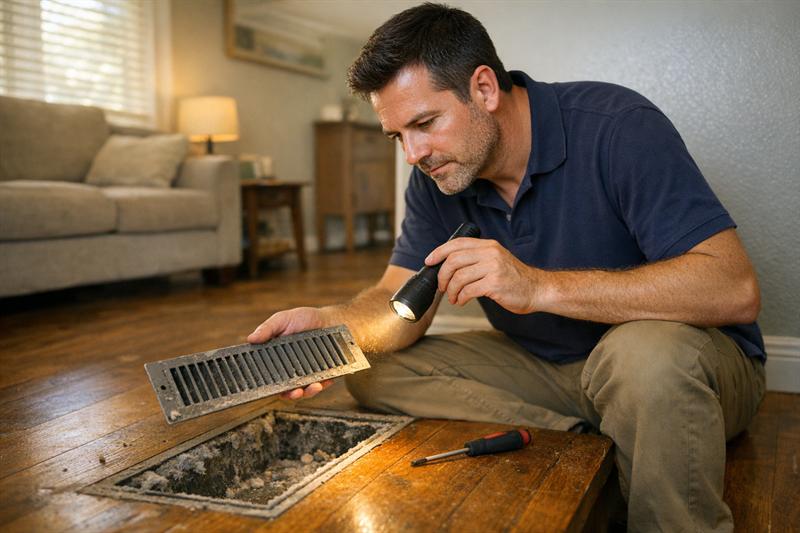
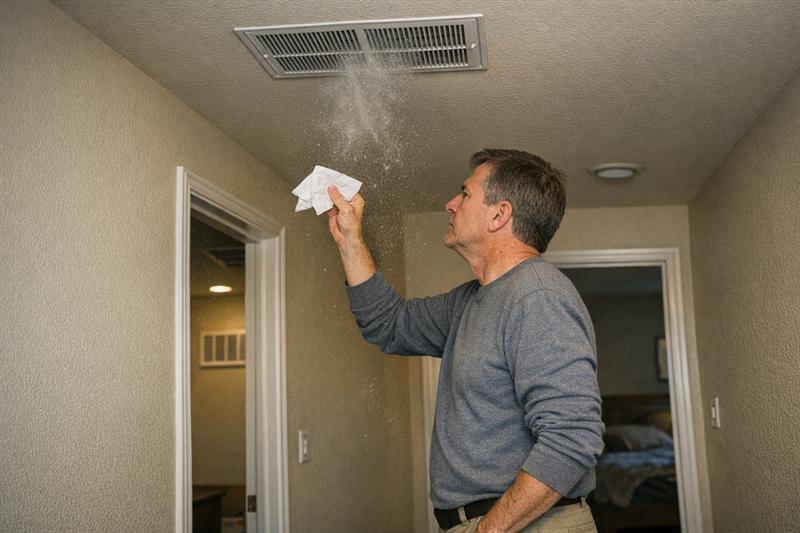
A small amount of dust near vents is normal. Seeing visible particles blow out when the system starts is not. That usually points to buildup inside the ductwork or around the vents.
What It Can Indicate Inside Your Ductwork
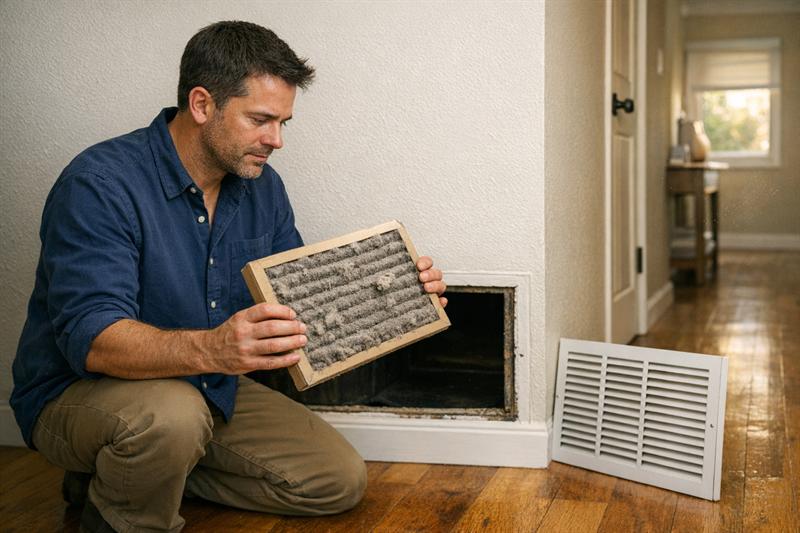
Dust naturally settles inside ducts over time. In homes with pets, recent construction, or high outdoor dust, buildup can happen faster. Once enough collects, airflow may start pushing some of it back into the living space.
At that point, the system is not just moving air. It may also be circulating dust that has collected inside the ducts, which keeps the problem going until the source is addressed.
Sign #2: Uneven Airflow Between Rooms
Duct Restriction vs. HVAC System Issues
If one room feels comfortable and another never does, airflow is not balanced. A restriction somewhere in the duct system is one possible cause.
Partial blockages, disconnected sections, leaks, or crushed ductwork can all limit airflow to certain areas. At the same time, not every imbalance comes from dirty ducts. System sizing, duct design, dampers, and insulation can also affect comfort.
This is where problems can be misidentified. Cleaning will not solve a structural duct issue, and ignoring a restriction allows airflow problems to continue.
Sign #3: Rising Energy Bills Without Explanation
How Duct Problems Reduce Efficiency
Restricted or leaking ducts can make the system work harder to move air through the home. That extra effort often shows up as longer run times and higher energy use.
This usually develops gradually. The system runs more often, struggles to maintain temperature, and puts added strain on components.
If energy bills increase without a clear change in usage, the duct system may be part of the problem.
Sign #4: Musty or Stale Odors Coming from Vents
Dust, Debris, or Moisture Inside the System
Odors that appear when the system runs often come from somewhere inside the HVAC system or ductwork. Common sources include dust buildup, trapped debris, or moisture.
When odors develop, they tend to return each time air circulates until the source is identified and corrected.
The longer the issue remains, the more noticeable it can become throughout the home.
Sign #5: Increased Allergy or Respiratory Symptoms Indoors
How Air Circulation Affects Indoor Air Quality
If the air feels more irritating indoors than outside, the HVAC system may be contributing. Ductwork plays a role in how air and airborne particles move through the home.
Dust, pollen, and fine particles can settle in the system and continue circulating when the HVAC runs. That can make indoor air feel less clean and harder to manage.
When buildup increases, the issue often becomes more noticeable.
Sign #6: Visible Dust Buildup Around Vents and Registers
Surface Dust vs. Internal Duct Buildup
If vents collect dust quickly after cleaning, the source may be inside the system rather than only in the room.
This can be frustrating. Surfaces get cleaned, but dust returns because the system keeps moving it through the same areas.
That cycle usually continues until the cause inside the ductwork or HVAC system is addressed.
Sign #7: It’s Been Years Since Your Last Duct Inspection
Recommended Timelines vs. Real-World Conditions
There is no universal schedule for duct cleaning. What matters more is how the system has been used and what it has been exposed to.
Homes with pets, renovations, older ductwork, or heavy HVAC use may build up debris faster. Problems also tend to show up after construction work or long gaps without maintenance.
Waiting too long can allow small airflow issues to turn into larger comfort and efficiency problems.
When Air Duct Cleaning Is Actually Necessary (and When It’s Not)
Duct cleaning makes sense when there is visible buildup, restricted airflow, or ongoing dust and odor concerns tied to the system. It is not something every home needs on a fixed schedule.
If multiple symptoms from this list are present, especially airflow issues combined with dust or odors, cleaning may be the right next step.
If there are no clear signs, cleaning alone may not improve system performance. A proper evaluation helps prevent unnecessary work and identifies whether cleaning, sealing, or repair is the better fix.
If you’re noticing several of these issues at the same time, it usually points to a real airflow problem.
- Dust coming out of vents when the system starts
- Rooms that never reach the right temperature
- Energy bills rising without a clear reason
- Odors that return every time the system runs
When these show up together, the system may be dealing with restricted airflow, leakage, or buildup. At that point, an inspection can help determine whether cleaning, repair, or another correction is needed to restore proper performance.
How Professional Duct Evaluation Works
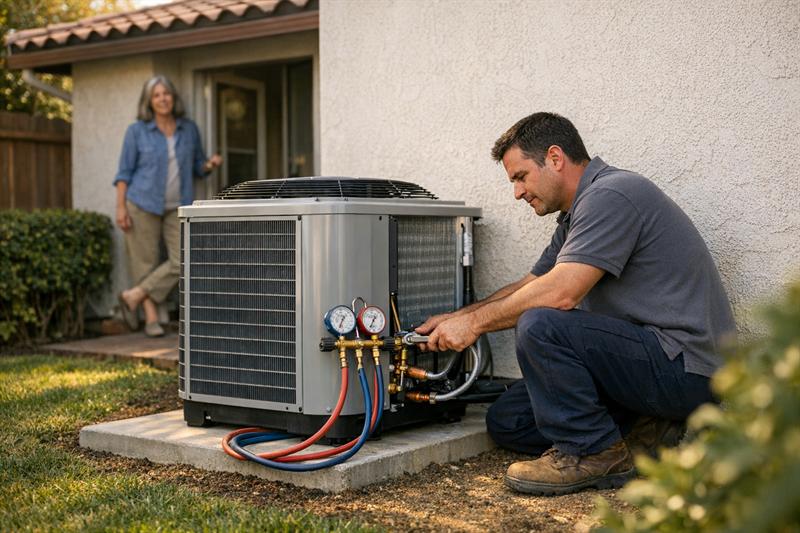
A proper evaluation looks at the full airflow path, not just the visible symptoms. Technicians check for buildup, blockages, disconnected sections, leaks, and other conditions that can affect airflow.
In many homes, the issue is not a single problem but a combination of debris, duct condition, and airflow restriction.
At Newman’s Heating and Cooling, the goal is to identify what is actually limiting system performance. Some systems need cleaning. Others need adjustments or repairs to correct airflow. For a full system check, visit air conditioning and furnace service and repair.
Key Takeaways
- Dirty, damaged, or restricted ducts can reduce airflow and system performance
- Multiple symptoms together usually point to a larger airflow issue
- Dust, odors, and uneven airflow are some of the most consistent warning signs
- Incorrect diagnosis can lead to wasted time and unresolved problems
- A full evaluation helps determine whether cleaning or repair is needed
Conclusion
When ductwork is restricted, leaking, or heavily built up, the HVAC system has to work harder to keep the home comfortable. That can lead to uneven temperatures, higher energy use, and air that never feels quite right.
These issues usually do not improve on their own. As buildup grows or duct problems continue, airflow can keep dropping and system performance can suffer.
Newman’s Heating and Cooling focuses on finding the source of the problem and correcting it properly. If you are seeing dust from vents, uneven airflow, or rising energy bills, the next step is a professional evaluation.
Start with an inspection through indoor air quality services to find out what your system needs and restore better airflow.
How Newman’s Heating and Cooling Approaches Duct Issues
Most duct problems do not come from a single cause. A common pattern is buildup combined with airflow restriction or duct leakage, which affects both comfort and efficiency.
The approach is to evaluate the full system, including duct condition, airflow, and how the equipment is performing during normal operation.
This helps identify the real problem and correct it instead of guessing or applying the wrong fix.
FAQ
How do you know if your air ducts need cleaning?
Common signs include dust blowing from vents, uneven airflow, odors when the system runs, and higher energy bills without another clear cause. When several show up together, the duct system likely needs attention. An inspection helps confirm whether cleaning is the right solution.
Is air duct cleaning really necessary?
It can be necessary when buildup or blockages are affecting airflow, dust levels, or system performance. Homes with visible signs usually benefit the most. An evaluation helps determine whether cleaning will make a meaningful difference.
How often should air ducts be cleaned?
There is no set schedule for every home. Homes with pets, renovations, older ducts, or heavy use may need attention sooner. Inspections are a better guide than guessing by time alone.
Can dirty air ducts affect your health?
Dirty ducts can circulate dust and airborne particles through the home, which may make indoor air feel less comfortable. Addressing the source can improve overall air quality and system cleanliness.
Will cleaning air ducts improve airflow?
If buildup is restricting airflow, cleaning can help restore movement through the system. If the issue is caused by leaks, damaged ducts, or design problems, additional work may be needed. Proper diagnosis helps match the solution to the problem.
What are the signs of mold in air ducts?
Common warning signs include musty odors, visible buildup near vents, and moisture problems in or around the HVAC system. Because several issues can look similar, an inspection is the best way to determine the cause and the right next step.