Quick Answer: A heat pump is a system that moves heat instead of creating it, so one unit can both heat and cool your home. It can reduce the need for separate systems, but results depend on choosing equipment that fits the home and installing it correctly.
Introduction
Many homeowners first hear about heat pumps when they’re told one system can replace both their AC and furnace. The idea sounds straightforward, but it naturally raises a question: how can one unit handle both heating and cooling?
That’s where confusion often starts. Without a clear understanding of how a heat pump works, it’s easy to choose a system that doesn’t fit the home well. The result can be uneven temperatures, higher utility bills, and disappointing performance.
What Is a Heat Pump? (Simple Definition)
A heat pump is an HVAC system that transfers heat instead of generating it. It pulls heat into your home during colder months and moves heat out during warmer months using electricity.
That’s why it can replace both a furnace and an air conditioner in many homes. Instead of creating heat, it moves existing heat where it’s needed. In Northern California, that approach often fits how homes use heating and cooling throughout the year.
How Does a Heat Pump Work?
A heat pump works by circulating refrigerant through a system that absorbs and releases heat. The system switches direction depending on the season, which allows it to both heat and cool.
Performance depends on more than the equipment itself. Proper sizing, airflow, and installation all affect how well the system heats, cools, and maintains comfort.
Heating Mode Explained
In heating mode, the system pulls heat from the outdoor air and transfers it inside. Even when outdoor temperatures feel cool, there is still heat in the air that the system can capture.
The refrigerant absorbs that heat, the compressor raises its temperature, and the system releases it indoors. This cycle continues until the home reaches the thermostat setting.
When the system is properly matched to the home, it can provide steady, even heating. If sizing or airflow is off, it may run longer and struggle to keep up.
Cooling Mode Explained
In cooling mode, the process reverses. The system removes heat from inside your home and releases it outdoors, much like a traditional air conditioner.
That’s what makes a heat pump practical for many homeowners. One system handles both heating and cooling without relying on separate units for each job.
Key Components of a Heat Pump System
- Outdoor unit: Handles heat exchange with the outside air
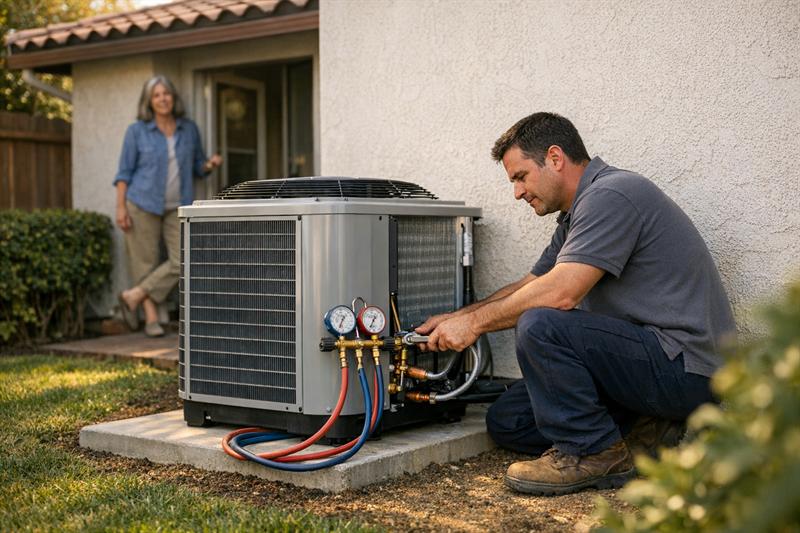
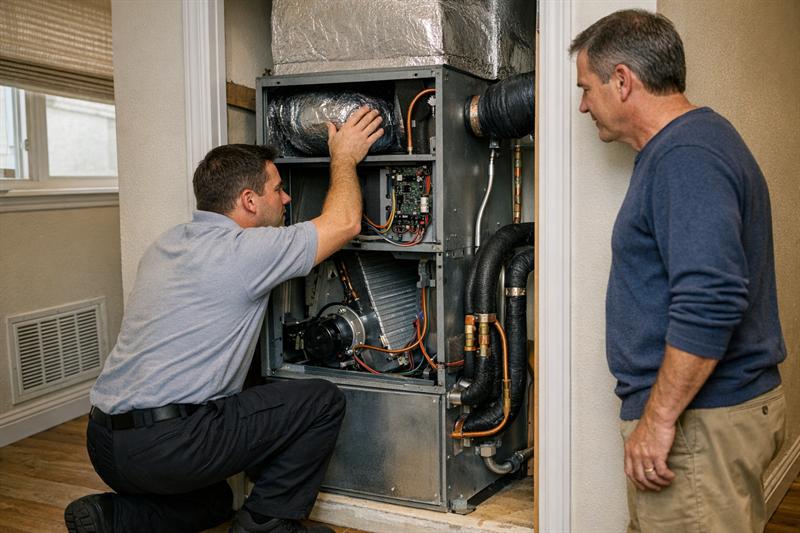
- Indoor unit: Delivers conditioned air through the home
- Refrigerant: Transfers heat through the system
- Thermostat: Controls system operation
These parts need to work together as a complete system. If equipment selection, airflow, or controls are not aligned, comfort and efficiency can suffer.
Why Heat Pumps Work Well in California’s Climate
Heat pumps are well-suited for moderate climates, which makes them a strong option for homes in Sacramento, Natomas, and Roseville.
Milder winters mean the system usually doesn’t have to work as hard to pull heat from the air. At the same time, it cools the home the same way a standard AC system does. That balance is one reason many homeowners consider heat pump installation in Sacramento when replacing older equipment.
For homeowners replacing both an aging furnace and AC, a heat pump can be a practical all-in-one option.
Heat Pump vs Traditional HVAC Systems
Choosing between a heat pump and a traditional system depends on how your home uses heating and cooling, the condition of your current equipment, and how the home is set up.
A useful comparison looks beyond the equipment alone. Ductwork, insulation, electrical capacity, and day-to-day comfort all matter when deciding which system makes the most sense.
Heat Pump vs Furnace
A furnace generates heat by burning fuel or using electric resistance, while a heat pump transfers heat using electricity. Furnaces generally deliver hotter supply air, but in moderate climates, heat pumps can be an efficient option for everyday heating.
In Northern California, where extreme cold is less common, many homeowners find a heat pump works well for typical seasonal needs.
Heat Pump vs Air Conditioner
A heat pump works much like an air conditioner when cooling. The difference is that it can reverse operation to provide heating as well.
This allows one system to handle both functions instead of relying on separate equipment.
When a Hybrid System Makes Sense
A hybrid or dual-fuel system combines a heat pump with a furnace. The heat pump handles most heating and cooling, while the furnace can take over when outdoor temperatures drop further.
This setup can make sense in homes with existing ductwork or where additional heating output is preferred during colder weather. It can also be a practical middle ground when a homeowner wants heat pump efficiency without giving up furnace backup.
Types of Heat Pumps for Homes
Not all heat pumps are the same. The right system depends on your home’s layout, ductwork, and how different areas of the home are used.
Air-Source Heat Pumps
This is the most common option. It works with ducted systems and can provide whole-home heating and cooling.
Ductless Mini-Split Systems
Ductless systems are often used in homes without ductwork or in spaces where zoned control is helpful. They allow different rooms or areas to be adjusted separately.
Dual-Fuel Systems
These systems combine a heat pump with a furnace and switch between them based on operating conditions and system settings.
Benefits of Installing a Heat Pump
- Uses less energy in many moderate-climate homes
- Provides heating and cooling in one system
- Can maintain more consistent indoor temperatures
- Reduces reliance on gas heating in all-electric setups
- May lower long-term operating costs, depending on the home and utility rates
These benefits depend heavily on proper installation. If the system is not sized or configured correctly, performance and efficiency can fall short.
Things to Consider Before Installing a Heat Pump
- Ductwork condition and airflow
- Home insulation quality
- Electrical capacity
- System sizing
- Upfront installation cost
Many installation problems trace back to the home, not just the equipment. For example, poor ductwork or weak airflow can lead to uneven temperatures and short cycling even with new equipment.
If you’re already dealing with rising energy bills or inconsistent comfort, those issues are worth reviewing before replacing the system. Similar concerns often come up during heating system replacement in Sacramento.
When to Consider a Heat Pump Replacement or Upgrade
If your current system is aging, inefficient, or requiring frequent repairs, it may be a good time to consider whether a heat pump is the right replacement.
Common signs include:
- Frequent repairs
- Rising utility bills
- Uneven heating or cooling
- System age over 10–15 years
When homeowners wait until both heating and cooling equipment fail at the same time, decisions often have to be made quickly. Planning ahead usually gives you more flexibility in equipment choice and scheduling.
If you’re dealing with an older system, rising bills, or uneven temperatures, it may be time to compare replacement options before the situation becomes more urgent.
- Your system runs constantly but still struggles to keep up
- Rooms feel inconsistent throughout the house
- Repair costs continue to add up
- Your furnace and AC are both nearing the end of their lifespan
At that stage, a full system evaluation can help you avoid replacing old equipment with a new setup that has the same underlying issues.
Conclusion
A heat pump can simplify home comfort by handling both heating and cooling in one system. But good results depend on more than the equipment alone. The system needs to be matched to the home, installed correctly, and supported by proper airflow and duct performance.
In many cases, the equipment is not the main issue. The outcome depends on how well the full system is planned and set up.
Newman’s Heating and Cooling helps homeowners across Sacramento, Natomas, and Roseville evaluate their current setup and decide whether a heat pump is the right fit. If your system is aging or struggling to keep up, it may be time to look at your options and get a clear recommendation based on your home.
Key Takeaways
- A heat pump moves heat instead of generating it
- It can replace both a furnace and an air conditioner in many homes
- It performs well in moderate climates like Northern California
- System sizing and installation directly affect performance
- An aging or inefficient system is often a good time to consider switching
How Newman’s Heating and Cooling Approaches Heat Pump Installation
Every home operates differently, and that’s why equipment selection is only part of the process. The focus is on how the home actually heats and cools day to day.
That includes evaluating ductwork, airflow, and how consistently the home maintains temperature. Replacing equipment without addressing underlying airflow problems can leave homeowners with the same comfort issues after installation.
The goal is to match the system to the home so it performs reliably from the start.
FAQ
What is a heat pump in simple terms?
A heat pump is a system that moves heat instead of creating it, allowing it to both heat and cool a home. It uses refrigerant to transfer heat in or out depending on the season. That makes it a practical option when replacing both heating and cooling systems.
How does a heat pump work in winter?
It pulls heat from the outdoor air and moves it indoors using a compressor and refrigerant cycle. Even in cooler weather, there is usually enough heat in the air for the system to use. In moderate climates, this can support steady heating.
Do heat pumps work well in California?
Yes, they are generally well-suited for California’s mild winters and warm summers. That allows them to operate effectively year-round in many homes. Proper installation plays a major role in how well they perform in a specific house.
Is a heat pump better than a furnace?
In moderate climates, a heat pump is often the more efficient option. A furnace may provide stronger heat output in very cold conditions, but that level of heating is less commonly needed in Northern California. The better choice depends on the home and the overall system design.
How much does it cost to install a heat pump?
Costs vary based on system type, home size, and installation complexity. Ductwork changes, electrical upgrades, and equipment selection can all affect the final price. A home-specific evaluation is the best way to get an accurate estimate.
Can a heat pump replace both AC and heating?
Yes, a heat pump can handle both heating and cooling in one system. It reverses operation depending on the season. That’s why it is commonly considered when replacing older HVAC equipment.