Quick Answer: Common signs your furnace may need repair include unusual noises, uneven heating, rising energy bills, and frequent cycling. These problems often start gradually and usually get worse if they are ignored.
Introduction
If your furnace is making new noises, heating unevenly, or running longer than usual, those changes are early signs that something is not working as it should. Many homeowners are not sure whether the issue is minor or more serious, which can lead to delays in getting it checked.
At Newman’s Heating and Cooling, furnace problems often start with small performance changes rather than a complete breakdown. Catching those signs early can help prevent a more disruptive and expensive repair later.
Why Early Furnace Problems Are Easy to Miss
Furnace issues often develop slowly. The system may still heat your home, just not as evenly or efficiently as it used to. Because the change is gradual, it is easy to overlook.
Many people respond by adjusting the thermostat or assuming the problem is related to colder weather. Meanwhile, the furnace may be working harder than normal. Over time, that extra strain can increase wear on internal parts and make repairs more likely.
Common Signs Your Furnace Needs Repair
- Unusual noises like banging, rattling, or squealing
- Uneven heating where some rooms stay colder than others
- Higher energy bills without a clear reason
- Frequent cycling with the furnace turning on and off more than usual
- Weak airflow from vents
- Strange smells when the system runs
- Cool or lukewarm air instead of steady heat
1. Unusual Noises (Banging, Squealing, Rattling)
Different sounds can point to different mechanical issues. Banging may be related to ignition or expansion issues, squealing is often associated with worn moving parts, and rattling can suggest loose components.
Noises often start subtly and become more noticeable over time. If the cause is not addressed, the underlying problem can worsen and lead to more extensive repairs.
2. Inconsistent or Uneven Heating
If some rooms feel comfortable while others stay cold, the furnace may not be distributing heat effectively. This can be related to airflow restrictions, duct issues, or declining system performance.
When heating becomes uneven, the system may run longer to try to keep up. That added runtime can increase wear and gradually reduce efficiency.
3. Rising Energy Bills Without Explanation
An increase in energy bills without a clear reason can point to declining furnace efficiency. The system uses more energy to maintain the same indoor temperature.
In many cases, homeowners notice higher utility costs before they notice a clear comfort problem. That usually means the furnace has been working harder than normal for some time.
4. Frequent Cycling (Turning On and Off)
Short cycling happens when the furnace turns on and off more often than it should. This can be related to thermostat problems, airflow restrictions, or internal component issues.
That repeated stopping and starting puts added stress on the system. Over time, it can wear down key parts faster and increase the need for repair.
5. Weak Airflow from Vents
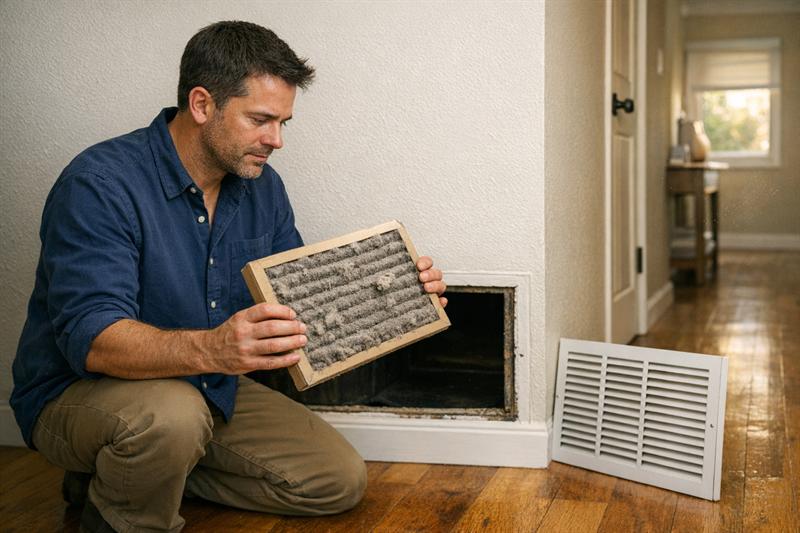
Weak airflow is often caused by dirty filters, duct restrictions, or blower motor problems. Even when the furnace is generating heat, that heat may not be reaching the living space effectively.
This issue usually becomes more noticeable over time. Reduced airflow can force the furnace to run longer, affecting both comfort and efficiency.
6. Strange Smells When Running
A light dusty smell can be normal when a furnace starts up, especially after sitting unused for a while. Persistent or strong odors, however, can signal a problem.
Burning or electrical smells should not be ignored. They can point to overheating components or other issues that need prompt attention.
7. Furnace Blowing Cool or Lukewarm Air
If the furnace runs but does not produce steady heat, the issue may involve the ignition system, airflow, or other internal components.
This is one of the clearer signs that service may be needed. The system is running without heating properly, and continued operation can lead to further performance problems.
Warning Signs That Require Immediate Attention
- Strong or persistent burning smells
- Furnace shuts off unexpectedly
- No heat during cold conditions
- Sudden or significant changes in system behavior
If you notice any of these, it is best to address the issue promptly. Problems at this stage can quickly lead to a full loss of heat or more extensive system damage.
Scheduling furnace repair service can help identify the cause and keep the problem from getting worse.
What These Signs Usually Mean (Behind the Scenes)
Many furnace problems begin with smaller issues such as restricted airflow, worn parts, or sensor malfunctions. These problems do not always stop the system right away, but they can affect how well it runs.
One issue can also place added strain on another part of the system, creating a chain reaction. Over time, that pattern often leads to more noticeable comfort and performance problems.
Recognizing the early signs can help you address the issue before it turns into a larger repair.
Repair vs Replacement: How to Tell the Difference
Many furnace problems can be repaired, especially when they are caught early. In many cases, addressing the issue at that stage restores normal performance without major work.
However, if the system is older, needs frequent repairs, or continues to lose efficiency, repair may become less practical. In those situations, replacement can be the more reliable long-term choice.
If you are weighing both options, it may help to review when furnace replacement makes more sense.
When to Call for Professional Furnace Repair
- Multiple symptoms appear at the same time
- Problems return after a temporary fix
- The system runs longer but performs worse
- Noises, smells, or airflow issues continue
If several of these are happening together, the furnace is likely already under strain. Waiting usually gives the problem more time to progress.
Getting help through heating and cooling services early can help pinpoint the cause and prevent a larger breakdown.
How Preventative Repairs Save Money Long-Term
Addressing smaller issues early can reduce strain on the system. That helps limit wear on components and lowers the chance of an unexpected breakdown.
Waiting until the furnace stops working completely often leads to more complicated and disruptive repairs. Early service helps the system operate more consistently and can prevent avoidable damage.
Conclusion
Furnace problems often show up through clear warning signs such as unusual noises, uneven heating, and reduced airflow. Ignoring those signs can allow smaller issues to grow into larger and more expensive repairs.
At Newman’s Heating and Cooling, many repair calls start with a change in performance that was easy to dismiss at first. What seems minor at the beginning can become a much bigger problem if it is left alone.
If your furnace is showing any of these signs, taking action now is the practical next step. A professional inspection can help identify the issue early and restore more reliable performance.
Key Takeaways
- Furnaces often show warning signs before a breakdown
- Noises, airflow issues, and reduced efficiency are common indicators
- Problems usually worsen over time if they are ignored
- Early repair is often the most practical and cost-effective approach
FAQ
How do I know if my furnace needs repair or replacement?
It depends on the age of the system, how well it is performing, and how often it needs service. Older furnaces with recurring problems often become less reliable over time. A professional inspection can help you compare the options.
Is it safe to run a furnace that is making noise?
Some operating sounds are normal, but new or persistent noises can point to internal wear or mechanical problems. It is best to have unusual sounds checked before they lead to a bigger repair.
Why is my furnace running but not heating properly?
This is often related to airflow restrictions, ignition issues, or worn components. The system may still be operating, but if it is not delivering steady heat, service is usually needed.
What is the most common furnace problem?
Airflow restrictions and normal component wear are among the most common furnace issues. Both can reduce efficiency and make the system work harder than it should.
How long can I wait before fixing a furnace issue?
Small problems tend to get worse with time, especially during periods of heavy use. Addressing them early is usually the best way to avoid more complicated and costly repairs.
Can a furnace suddenly stop working without warning?
It can happen, but many furnaces show warning signs first. Changes in performance, noise, airflow, or cycling patterns often show up before a complete loss of heat.