Quick Answer: HVAC efficiency problems usually show up when your system runs longer, costs more to operate, and still struggles to keep your home comfortable. These changes often point to airflow restrictions, worn components, control issues, or system imbalance that typically gets worse without service.
Why HVAC Efficiency Problems Matter More Than You Think
HVAC systems rarely stop working without warning. More often, performance declines first. The system still turns on, but it runs longer, uses more energy, and delivers less consistent comfort.
That can make efficiency issues easy to miss at first. Nothing seems obviously broken, yet energy bills keep climbing and certain rooms never feel quite right. That gap between performance and cost is often where efficiency loss starts to show.
If the problem is ignored, the system has to work harder to compensate. Over time, that added strain can increase wear, reduce airflow, and lead to more involved repairs. Regular HVAC service and repair can help catch these issues before they build.
7 Common Signs Your HVAC System Is Losing Efficiency
- Rising energy bills without increased usage: If your routine stays about the same but cooling or heating costs rise, the system may be working harder to deliver the same result. This is one of the clearest early signs of HVAC efficiency problems.
- Uneven temperatures between rooms: Hot and cold spots often point to airflow or ductwork issues. The system may be producing conditioned air, but it is not being delivered evenly.
- System running longer than usual: Longer cycles can mean the system is losing efficiency. It takes more time to reach the set temperature, which adds wear over time.
- Weak airflow from vents: Reduced airflow is a common early warning sign. It often indicates a restriction that limits how much air moves through the system.
- Frequent cycling (turning on and off): Short cycling can signal that the system is not operating steadily. That pattern increases strain and reduces overall efficiency.
- Strange noises or odors: New sounds or smells can point to internal wear, debris buildup, or other developing issues.
- Indoor humidity problems: When indoor humidity starts to rise during cooling season, the system may no longer be removing moisture effectively. That often goes along with reduced cooling performance.
What Causes HVAC Efficiency Problems?
Dirty Filters and Restricted Airflow
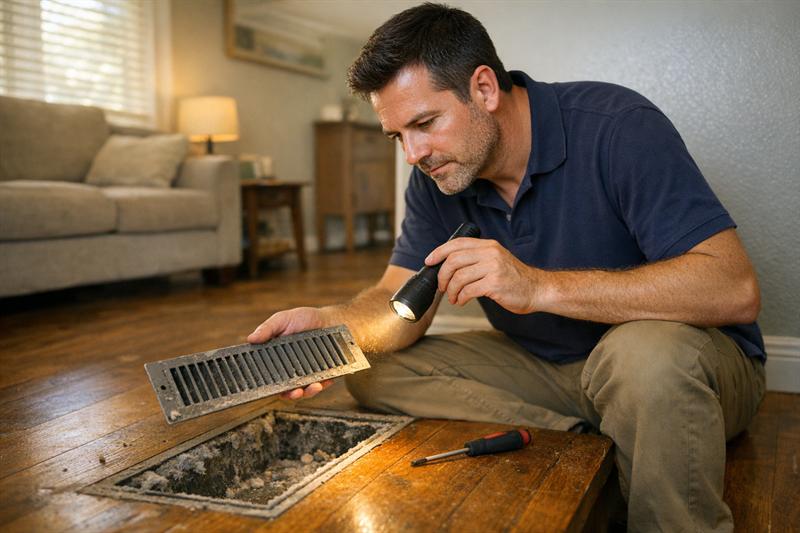
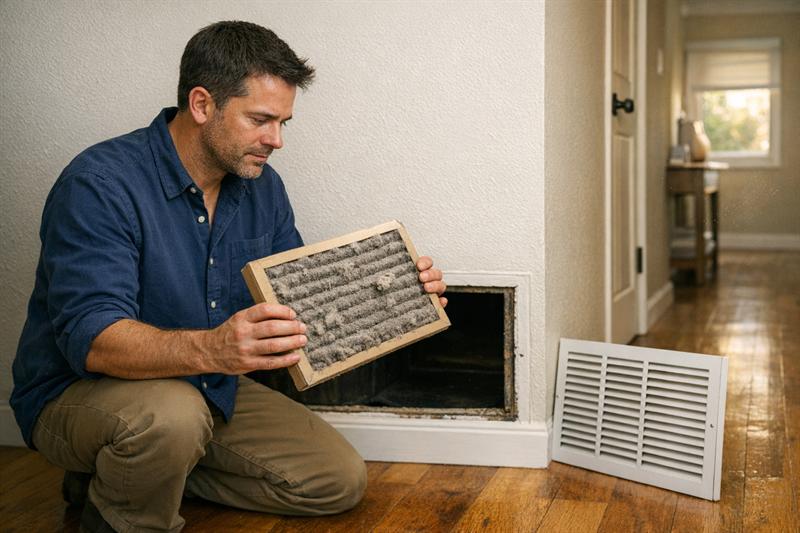
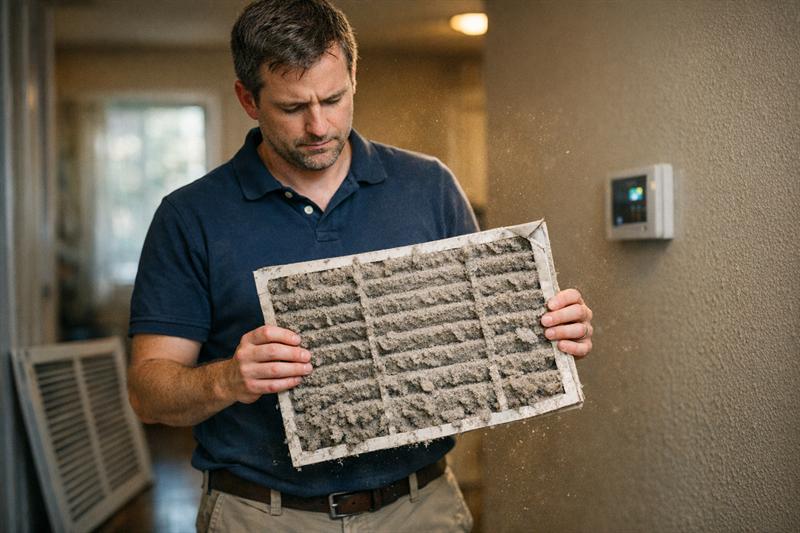
Restricted airflow is one of the most common causes of efficiency loss. A clogged filter limits how much air moves through the system, forcing it to run longer.
Once airflow drops, other components have to work harder to maintain performance.
Leaky or Poorly Designed Ductwork
Ductwork that leaks or is poorly balanced reduces how much air reaches each room. The system may be running, but conditioned air is lost before it gets where it is needed.
This often leads to uneven temperatures and longer run times as the system tries to compensate.
Refrigerant Issues
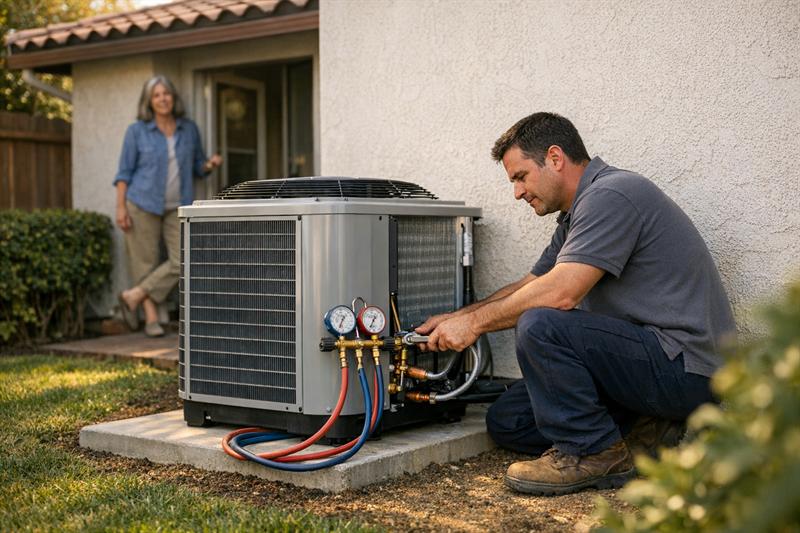
Low refrigerant reduces the system’s ability to remove heat. The unit may continue running, but cooling output drops.
That can create a cycle where the system runs longer without improving comfort, increasing overall strain.
Aging Components and Wear
Over time, components wear down and performance declines. Airflow can weaken, parts lose efficiency, and the system no longer operates at its original capacity.
This is common in older systems that still function but no longer deliver consistent results.
Thermostat or Control Problems
If the thermostat is not reading temperatures correctly or sending proper signals, the system cannot run efficiently. This often leads to inconsistent cycling or unnecessary run time.
Even a small control issue can affect comfort, efficiency, and how hard the equipment has to work.
When Efficiency Problems Turn Into Repairs
Efficiency problems tend to build over time rather than stay isolated.
A small airflow restriction can lead to longer run times. Longer run times increase wear on major components. That added strain can eventually result in a breakdown or a larger repair.
This is why delays often make the problem more expensive to correct. What may have started as a straightforward fix can become a more complex repair after the system has been under continuous stress.
If you are noticing these signs, it is time to take action:
- Your system runs constantly but still struggles to keep up
- Airflow feels weak across multiple vents
- Energy bills continue rising without a clear reason
- Some rooms never reach the desired temperature
When these symptoms show up together, the system is likely no longer operating efficiently. A professional inspection can help identify the cause.
Repair vs Replace: How to Decide
Age of the System
As systems age, efficiency usually declines. Even if the unit still runs, it may no longer perform at a level that makes sense to keep maintaining.
That is often when replacement becomes a practical consideration.
Frequency of Repairs
Frequent repairs can indicate deeper system issues. Small fixes may restore function temporarily, but they do not always address the underlying efficiency loss.
This pattern can lead to repeated service calls without much long-term improvement.
Efficiency Gains vs Replacement Cost
Newer systems are designed to operate more efficiently. The decision often comes down to whether ongoing repair costs outweigh the benefits of improved performance and lower operating demand.
In many cases, looking at long-term cost gives a clearer answer than focusing only on the immediate expense.
How Regular Maintenance Prevents Efficiency Loss
Maintenance helps keep the system operating as intended. It addresses small issues before they affect overall performance.
This can include cleaning components, checking airflow, inspecting parts, and making adjustments. Each step supports system balance and output.
Systems that receive routine maintenance typically run more consistently and are less likely to develop avoidable performance problems.
Indoor air quality also affects how the system operates. You can learn more here: indoor air quality services.
Key Takeaways
- Efficiency problems usually show up as performance changes before a full breakdown
- Longer run times and higher energy bills are common early warning signs
- Airflow restrictions are one of the most common causes
- Problems tend to build over time and increase system strain
- Early service can help prevent more complex repairs or premature replacement
Our Approach to HVAC Efficiency Problems
Newman’s Heating and Cooling focuses on finding the source of efficiency loss, not just the symptom.
That means looking at airflow, system balance, and component condition together. In many homes, efficiency problems develop from a combination of smaller issues rather than a single obvious failure.
A thorough inspection helps identify the root cause so repairs can address the actual problem.
Conclusion
HVAC efficiency problems often start quietly, but they can lead to higher costs, reduced comfort, and increased system wear.
If your system is running longer, struggling to keep up, or costing more to operate, those are strong signs that performance has already declined. Waiting usually gives the problem more time to build and can increase the likelihood of more serious repairs.
Newman’s Heating and Cooling provides system evaluations to help identify these issues early and correct them properly. If your system is showing these signs, scheduling service now can help restore performance and prevent larger problems.
Frequently Asked Questions
What are the most common HVAC efficiency problems?
Direct answer: The most common problems include dirty filters, airflow restrictions, duct leaks, and aging components.
Why it happens: These issues reduce system capacity and often lead to longer run times and higher energy use.
Next step: When multiple signs appear together, a system inspection can help identify the exact cause.
Why is my HVAC system running but not cooling properly?
Direct answer: This often means the system is losing efficiency due to airflow problems, refrigerant issues, or component wear.
Why it happens: Longer cycles and uneven cooling are signs the system is not keeping up with demand.
Next step: Addressing the issue early can help prevent added strain on key components.
Can dirty filters really affect HVAC efficiency?
Direct answer: Yes, restricted airflow from dirty filters can directly reduce efficiency.
Why it happens: The system has to run longer to move the same amount of air, which increases wear and energy use.
Next step: Regular filter changes help maintain airflow and system performance.
How do I know if my HVAC system is failing or just inefficient?
Direct answer: Efficiency problems often show up before a full system failure.
Why it happens: Rising bills, longer run times, and uneven temperatures are common early warning signs.
Next step: A professional evaluation can help determine whether repair or replacement makes more sense.
Is it better to repair or replace an inefficient HVAC system?
Direct answer: The decision depends on the system’s age, repair history, and overall performance decline.
Why it happens: Systems with repeated issues can become more costly to maintain over time than to replace.
Next step: Comparing long-term costs and expected performance can help clarify the right choice.
How often should HVAC maintenance be done to maintain efficiency?
Direct answer: Most systems should be maintained once or twice per year.
Why it happens: Regular inspections can catch airflow issues and wear before they significantly affect performance.
Next step: Consistent maintenance supports long-term efficiency and reliability.